
You Can Say That Again! Echolalia in Visually Impaired Children

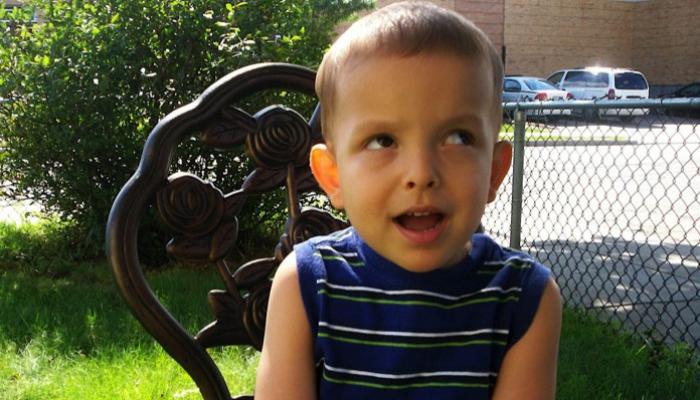
The word Echolalia derives from the ancient Greek myth about a nymph named Echo who could only repeat the last words of other people. Unrequited love left her heartbroken and she pined away until only her voice remained. It’s a cautionary tale about love and loss.
You may think this is an old story with little relevance today, unless your blind child is constantly repeating everything you say or seems to get stuck repeating one word or phrase over and over. In that case, you may have your own little Echo on your hands.
Does this conversation ring a few bells? (Please excuse the grammar—it’s a real life example from my real life!)
Parent: “Which story would you like tonight?”
Child: “What story am I wanting?”
Parent: “That’s right; Which story are you wanting?”
Child: “What story am I wanting?”
Parent: “Yes, what story are you wanting?”
Child: “What story am I wanting?”
Parent, now exasperated: “What story am you wanting. I mean… never mind. No stories tonight!”
That really is a cautionary tale.
Nowadays, it’s thought that as many as 80% of blind and visually impaired children exhibit echolalia in their speech patterns. It’s an ordinary part of language development (because it’s an excellent way to practice and learn real language skills) and is often seen in normally sighted children, but their period of echolalic-type speech tends to be much shorter.
Blind and visually impaired children, on the other hand, seem to find this behavior more useful, so for them it has a more extended life.
How Could Echolalia be Useful?
The uses of echolalia are many and varied. As mentioned above, it’s actually a normal stage of language development for sighted children as well. However, it’s not uncommon for blind and visually impaired children to spend a bit longer in the echolalic stage since they find it can function in some ways as sight does for other children:
- Who’s there?
A sighted child simply has to look to see who is in a room; A blind child does not have this ability, but does have the same interest in finding out, even before he has the verbal skills to do this in an unobtrusive way. Repeatedly asking questions that may have no bearing on what he is trying to find out can seem odd but when we consider that his question will elicit some form of response from the others within a room, it is more readily understandable as functionally adapted behavior. Frequent repetition of the behavior can then be seen as keeping him informed about whom is there and who has left. - Who’s where
Getting everyone to respond to him will also help your child know where others are in relation to him throughout a room. Notice how in the following example everyone at the table engages with Tommy in some way in response to his echolalia:
| Mum says, “Dinner time Tommy. Yum, yum.” Tommy says, “Dinner time Tommy. Yum, yum.” Mum interprets correctly that this is Tommy’s way of saying that he heard her. Tommy, now sitting at the dinner table with his siblings, says, “Dinner time Tommy. Yum, yum.” Mum pulls her own hair out, strand by strand. |
- Basic connections:
A sighted child will make a primary contact with others using eye contact. Although this is not possible for the blind child, he still has the same fundamental need that the sighted child had for that initial contact with other people. Echolalia gives him the semblance of this contact—and since it’s not necessary for the speech to do anything other than provide this connection, the child may not understand a need for it to be relevant speech, as echolalia does the job of mimicking frequent casual glances. - Conversations and social connections:
The blind child’s understanding of language (called responsive language) is, at this stage, greater than his ability to express language (called expressive language). He may have a desire to involve himself in the conversation of others but not have the ability to instigate or continue appropriate subjects. Echolalia can give the blind child the opportunity to seem to be involved in the conversation before his verbal abilities would allow it. This provides a feeling of inclusion in the social aspect of conversation which would otherwise have been fulfilled by eye contact and body language.
Ironically, even though the blind child seeks social inclusion with his use of echolalia, he is actually increasingly seen by others as different. In addition to the echolalia, pronoun confusion is apparent in the speech of many blind children, and this only serves to multiply his apparent detachment from the group.
Also, because his conversation can only ever be within the experience he already has and the clarity and usefulness of his experience is lessened because of his blindness, breaking away from this speech pattern can be very difficult, and what started as a transient developmental stage can become a rigidly performed habit.
What can you do to minimize echolalia?
 It is crucial to your sanity as a parent to remember that “This too will pass.” Every child at some point exhibits idiosyncratic quirks of behavior. Showing your child that there can be easier, more practical ways to use language to achieve what he wants is the most effective use of a parent’s time. Gentle, persistent guidance may be difficult when he is repeating for the 30th time something that was inane the 1st time, but it will work.
This is not about preventing him from speaking and neither is it about a parent exerting dominance or control over a child’s speech—on the contrary. This is about providing a path for your child to explore language, expand his abilities, and behave as an ordinary, social person and eventually a well-rounded, normal, socially-aware, and happy adult. And, as with raising any child, it’s a huge and daunting task!
Here are some tips to help you cope with your child’s echolalia and encourage him to move on to more expressive forms of language. Read through this advice and work on what seems the best approach to you. Remember, all kids learn at their own pace and react in their own ways, so be patient and don’t give up!
- There is no quick fix.
It is important for you to know and accept at the outset that giving your child an alternate to what works currently for him will take patience, commitment, and time. - Language is his bridge to the world.
His abilities with language will come directly from those around him, so make it work for both of you by providing him with a commentary on his world that grows with his understanding and abilities. The more expressive the language he is exposed to, the greater will be his ability with words; perhaps the most useful tool to give any child. So, for example, be sure to explain in very descriptive language what is going on around him, who is in the room and what they are doing, or what sounds he is hearing. A nice game to play is “I hear a…” because it builds on the child’s desire to repeat a single phrase but also requires them to think and fill in the blank. So sit outside and listen and have your child tell you what he hears. Help him out by saying, “I hear a motorcycle, I hear an airplane, I hear the leaves rustling in the breeze, etc.” Encourage him to listen and label his own sounds. - Explain the unspoken language of sighted people.
Explain what is going on. In order to “fit in” in a visual and sighted world he needs an understanding of what people do and why they do it. Describe the non-verbal language of others, give detail about the smiles, the nods, the gestures that complete other people’s speech and help him to emulate this where appropriate. It will bridge what might otherwise be perceived as a gap in his social behavior. - Model the correct response to a question or situation.
Sometimes a gentle nudge in the direction of appropriate responses or behavior is all he will need to act correctly this time, and positive feedback to this will ensure he will remember what he did right, so he can use a variation of the behavior the next time. Success breeds success. Here’s an example:
| The kindergarten teacher says every morning: “How are you today Tommy?” Every morning Tommy replies: “How are you today Tommy” Standing behind Tommy, his mum whispers in his ear: “Tommy’s fine and he had a big bowl of cereal for breakfast.” This is the correct response if mum was answering the teacher, but she’s offering it to Tommy. Now he has a choice, he may still say what he usually says; one morning soon, he may give the correct response. Or… Teacher says: “How are you today Tommy?” Tommy now has the answers to her question and a better idea of the parameters to follow. In addition, even if he is echolalic, he is more likely to repeat her last word—”happy”—which can be interpreted as a positive and appropriate response to her question, so he’s winning already! |
- Simplify your speech.
When your child is very young and just beginning to speak, it’s a good idea to keep things simple so that when he does repeat what you’ve said he’s actually correct. So, for example, you may say, “Bye bye, sweetheart,” instead of, “Bye bye, Tommy,” because when he repeats, “Bye bye, sweetheart,” his language will actually sound correct. Also, since blind children tend to have such a hard time with pronouns, it’s a good idea to just drop them altogether, at least until your child is four or five years old and ready to move on to pronouns. You may feel a little silly saying things like, “Mummy is going to pick you up now,” or, “Tommy sounds tired,” but it will help him know who you are taking about without having to decipher all those difficult pronouns. - Don’t ask unnecessary questions.
When you ask a question that you don’t really expect to be answered, you’re just placing more pressure on your child. Instead of saying, “Are you ready for a bath?” you could say, “Bath is ready!” or, “Tommy’s bath is ready.” Either way, you’re giving your child a phrase that they can readily repeat and learn as the signal that they’re about to take a bath. Plus, what if they did answer your question and said no? You’d still give them a bath anyway, so don’t leave yourself open to debate! - Play up your child’s strengths.
If your child is good at repeating words and phrases then harness that power to teach them to talk on their own! Let them copy your phrases while you slowly phase out your words and encourage them to fill in the blanks. This is a great way to allow your child to gain control and take ownership of their own language. Here’s an example:
| Mum rolls a ball to Tommy: “Tommy has the ball!” Tommy, holding the ball, says: “Tommy has the ball!” The next day, Mum rolls the ball to Tommy: “Tommy has the b—” The next day, Mum rolls the ball to Tommy: “Tommy has the —-” The next day, Mum rolls the ball to Tommy but doesn’t say anything. At this point Tommy gets lots of hugs and kisses for saying something on his own! |
- Don’t be tempted to ignore his echolalic speech.
Any speech is an attempt to communicate and deserves a response from you. Whatever the quality of the content, your child needs to know that his efforts are valued. - Find a Speech and Language Therapist who motivates and inspires both you and you child. Being able to trust the advice of a professional will be an invaluable addition to helping your child.
This is a long term issue, no quick fixes, no magic wands and it’s a bit like guerrilla warfare; you’ll have to be ever vigilant, ever ready with the correct word or phrase (or sometimes just an understanding cuddle) to save the day. And remember, it’s no fun for him either. Start today and help him help move himself toward freedom of expression. (And just think of all the great arguments you’re going to have when he’s older!!!)
Read this article in Arabic: قراءة هذا المقال بالعربية
Read this article in Spanish: Lea este articulo en Español
Read this article in Dutch: Echolalia of zweeftaal bij slechtziende kinderen
Related Posts

Eye Conditions and Syndromes, Support, Visual Impairment
Coping with a Diagnosis: Emotional Support for Families with Visually Impaired Children
Families with emotional support are more resilient. Learn how to establish emotional support with peers, professionals, and the community to help your family thrive.
Special Needs, Visual Impairment
Why Early Intervention Is Critical for Blind Children
Children diagnosed with visual processing disorders, low vision, or blindness need specialized treatment. Early intervention programs can help.

Eye Conditions and Syndromes, Visual Impairment
Anophthalmia: Navigating the Path from Diagnosis to Adaptation for Parents and Their Children
Anophthalmia is a rare disorder that results in childhood blindness. Early intervention services are important to help your baby maximize their potential.