
5 Proven Ways to Get Poop Out of Clothes

This post may contain affiliate links; please see our terms of use for details.
- There are several methods to get poop out of clothes, including soaking, machine washing, and natural remedies.
- It’s essential to pretreat stained clothing to prevent the stain from setting in.
- Immediately tackling stains helps make the process of getting poop out of clothes easier.
I still remember sitting at a restaurant, holding my infant, when I felt something wet. I don’t need to go into the details—you know where this is going. As parents, it’s not unusual to find poop on your clothing or your child’s, but what’s the best method to get it out?
Learning how to get poop out of clothes without having to throw them away is vital so you aren’t unnecessarily dropping money on new clothes.
As parents, we frequently learn as we go, so you’ll likely find one method that works better for your needs.
1. Pre-Treatment Steps
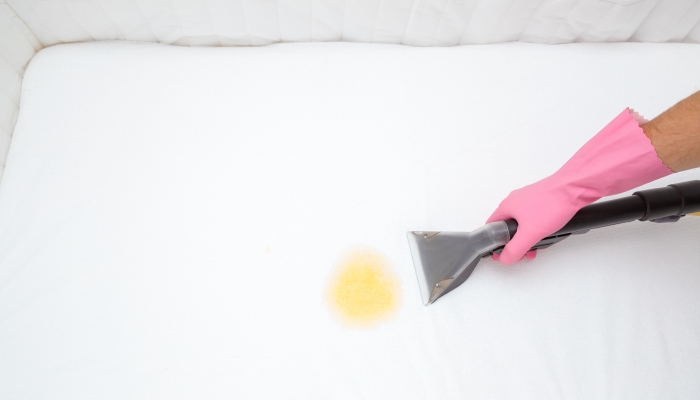
If diamonds are a woman’s best friend, a diaper blowout is her worst enemy. With three kids, I’ve had my fair share of “poo-namis,” as my best friend called them. In my naive days, I admittedly threw away soiled clothing because I didn’t think it stood a chance of survival.
However, I learned my lesson once my second and third came along. One of the most critical steps to getting poop out of clothes is to scrape excess poop while avoiding spreading the stain gently. Next, you’ll want to use cold water to prevent the protein in the stain from setting.
The key is to start the process immediately and not put the items in the washing machine until you’ve pre-treated and soaked them.
2. Soaking
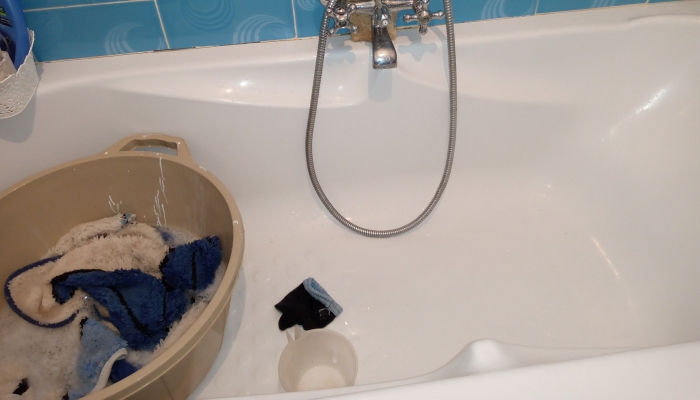
Once you’ve pretreated your clothes, it’s best to soak them in enzyme-based detergents to break down proteins. Detergents with enzyme ingredients11. Anderson, E., & Zagorski, J.. Trending – Laundry Detergent Enzymes. Center for Research on Ingredient Safety. 2022. https://www.canr.msu.edu/news/trending-laundry-detergent-enzymes help accelerate chemical reactions and processes to break down stains and dirt on fabric.
While there is research on some enzymes that can trigger allergic reactions, scientists have determined that enzymes in laundry detergents are safe and effective. If you experience an allergic reaction, it’s likely due to the fragrance or another ingredient, not the enzymes.
Ideally, you’ll use a laundry detergent with hydrolases22. Hede, P. D.. A beginner’s guide to enzymes in detergents. Novozymes. 2020. https://biosolutions.novozymes.com/en/dish/insights/article/beginners-guide-enzymes-detergents to break down protein; however, it’s not found in all detergents with enzyme ingredients.
Here are a few detergents with enzyme ingredients:
No products found.
No products found.
Lastly, how long you need to soak your clothes varies. Ideally, you’ll soak them for several hours for optimal results, but I frequently soak items overnight for maximum results.
No products found.
3. Hand Washing
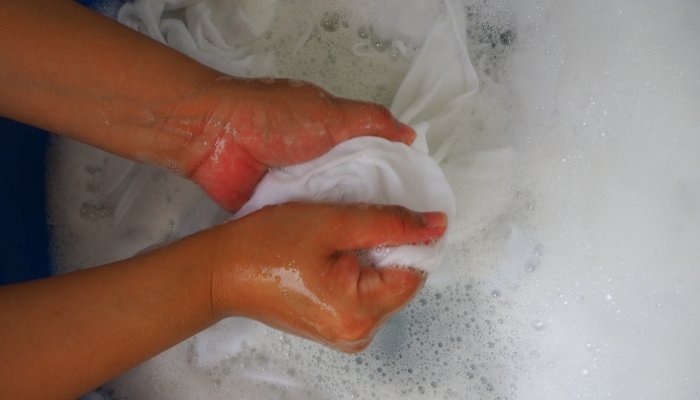
You can wash most baby clothes in the washer, but some benefit from hand washing, especially when getting stains out. If your baby doesn’t have sensitive skin, I highly recommend using Dawn Powerwash Spray. While it’s meant for dishes, it works amazingly on stains.
No products found.
My boys’ white uniform shirts frequently don’t look white, so I spray them with Powerwash and let them sit before cleaning. Sometimes, the stains completely vanish; it’s impressive.
However, if you want to use something gentler, opt for a detergent like Dreft Newborn Baby Liquid Laundry Detergent, which has no added chlorine, dyes, or phosphates.
No products found.
When hand washing, follow these steps:
- Fill a container with warm water and detergent, thoroughly mixing the solution.
- After pre-treating the stain, submerge the clothing in water and gently wash it with your hands.
- Leave the clothing item in the solution and let it sit for up to 30 minutes.
- Drain the dirty water, replace it with fresh water, and gently rinse your item.
- Avoid wringing the item, which can cause damage just like a washing machine.
- Continue replacing the water as needed, ensuring you remove the soap.
- Lay your item flat to dry, like on a towel, clothing rack, or in the sun.
Tip: To help remove excess moisture, wrap your item in a towel and squeeze it gently.
4. Machine Washing
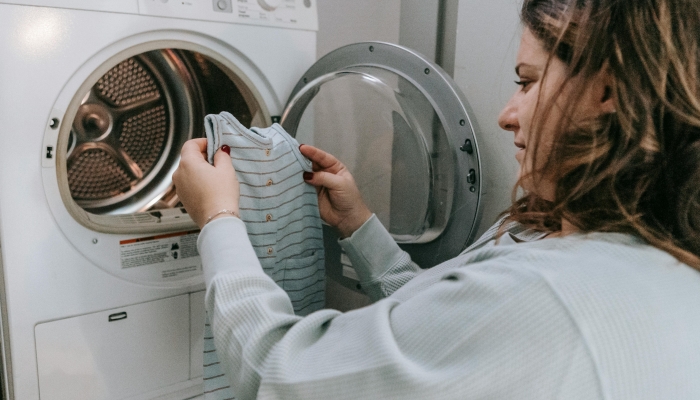
Your washing machine is another excellent option for getting poop out of clothes; however, it’s essential to follow the pre-treatment steps before putting the item in the wash. Typically, the stain will set in if you only machine wash.
Generally, you want to use the hottest setting to help break down and remove the stain. Many washing machines have a sanitary setting ideal for cleaning soiled clothing, and you also want to ensure you wash clothing with the soiled part facing out.
You can also add a stain remover, like OxiClean Free Versatile Stain Remover Powder.
No products found.
You should check the clothing before drying to ensure the stain is gone. If it’s still there, repeat the washing process before drying.
5. Natural Remedies
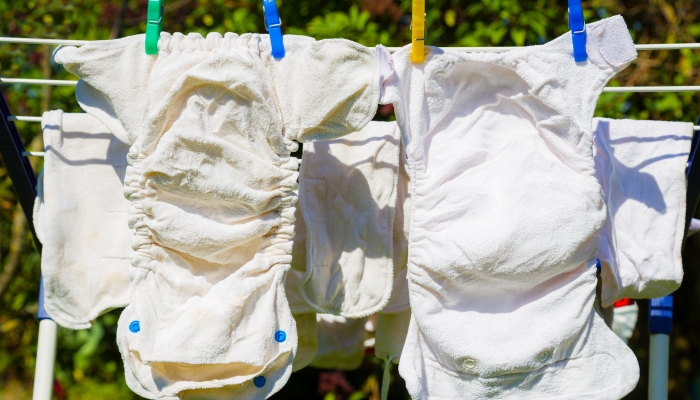
In addition to using various detergents, natural remedies help treat stains. For example, vinegar and baking soda are fantastic at getting poop out of clothes.
Here’s a closer look at how to use vinegar and baking soda to remove stains:
- Create a paste with equal parts baking soda and vinegar.
- Rub the paste directly into the stained area. (You’ll likely want to use gloves.)
- Let the paste sit for at least 30 minutes.
- Wash out the paste.
- Soak your item in hot water and vinegar overnight.
- Run your item through the wash.
Another natural remedy to get the poop out of clothes is sun bleaching, which provides a natural bleaching effect of sunlight.
Remember to pre-treat your clothes before using natural remedies.
FAQs
How often should I wash poop-stained clothes to prevent odor build-up?
You should wash poop-stained clothes immediately to prevent odor build-up. If you’ve tried several methods without luck, it might be time to toss the clothing. Luckily, babies grow fast, so you’ll quickly move on to the next size.
Can poop stains harbor bacteria even after washing?
It’s important to understand that laundry detergent doesn’t kill germs, but bleach and hot water do. According to the Centers for Disease Control and Prevention33. Preventing Waterborne Germs at Home. Centers for Disease Control and Prevention. 2024. https://www.cdc.gov/healthywater/drinking/preventing-waterborne-germs-at-home.html (CDC), water temperatures ranging from 130 to 140 degrees Fahrenheit(°F) can eliminate most harmful bacteria.
Since high water temperatures can cause scalding, it’s vital to use caution when washing clothes in high temperatures.
How do I prevent poop stains on clothes during potty training?
It’s challenging to prevent accidents during potty training; however, training pants can be a compromise between diapers and underwear. In addition, avoid complicated clothing with snaps, buttons, or zippers, which can be challenging if your child is in a hurry to go potty.
You can also try naked potty training, where your child is bottomless while awake.
References
- Anderson, E., & Zagorski, J. (2022, September 26). Trending – Laundry Detergent Enzymes. Center for Research on Ingredient Safety. https://www.canr.msu.edu/news/trending-laundry-detergent-enzymes
- Hede, P. D. (2020, May 7). A beginner’s guide to enzymes in detergents. Novozymes. https://biosolutions.novozymes.com/en/dish/insights/article/beginners-guide-enzymes-detergents
- Preventing Waterborne Germs at Home. Centers for Disease Control and Prevention. (2024, April 3). https://www.cdc.gov/healthywater/drinking/preventing-waterborne-germs-at-home.html
Related Posts

Parenting
Why Music and Multisensory Learning Matter for Blind Children
WonderBaby founder Amber Bobnar shares thoughts on Braille literacy, multisensory learning, tactile education, and music accessibility for blind and disabled children.

Parenting, Special Needs
Love Languages for Kids With Disabilities: 5 You Might Miss
Learn 5 love languages you might miss in kids with disabilities and special needs, plus simple ways to recognize and respond to their unique signs of connection and affection.

Parenting
Could Future Implants Help Blind Kids See?
Learn about new research exploring advanced vision-restoring technology and what these emerging tools could mean for children who are blind or visually impaired.