
Neuralink Announces Plans to Restore Sight to the Blind with Brain Chip

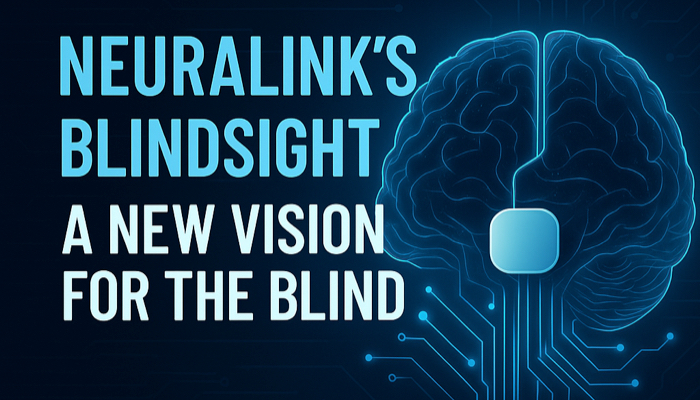
In a major development in neurotechnology, Elon Musk’s company Neuralink has announced plans to begin human trials of its new “Blindsight” brain chip by the end of 2025. This innovative device is designed to restore vision for people who are completely blind, including those who were born blind or have lost both eyes.
Unlike traditional retinal implants, Blindsight bypasses the optic nerve entirely. Instead, a small microelectrode array will be surgically implanted into the brain’s visual cortex by a precision robot. The implant receives data from an external camera and stimulates neurons to help the brain perceive visual information directly.
The U.S. Food and Drug Administration granted Blindsight “breakthrough device” status in 2024, and early tests in animals have shown promising results.
At first, the chip will only offer basic, low-resolution vision, described by Musk as similar to “Atari graphics.” But the goal is to gradually improve resolution over time, potentially even allowing users to see infrared and ultraviolet light.
This news could open new possibilities for individuals who are blind due to conditions that cannot be treated through traditional means. For parents of blind children, especially those with severe or congenital vision loss, this is a development to watch closely.
Read more in this Newsweek article.
Related Posts

Assistive Technology, Orientation and Mobility, Visual Impairment
A New Mobility Technology for Blind Users: Lumen Smart Glasses
Learn about Lumen smart glasses, an innovative assistive technology designed to help blind and visually impaired users navigate safely and independently.

Braille and Literacy, Music Play, Special Needs, Visual Impairment
Braille needs allies. Music can be one of them.
An inspiring look at how music can support Braille literacy, creativity, and inclusion for blind children.

Tactile Arts and Crafts, Visual Impairment
What Does Art Feel Like? A Guide to Tactile Creativity for Blind Children
Discover how blind children explore art through touch. Learn practical ways to support tactile creativity, build early Braille literacy, and nurture imagination with hands-on projects, textures, and accessible art experiences.