
Teaching a Blind Child How to Use a Spoon Independently

This post may contain affiliate links; please see our terms of use for details.
By Andrea Story (as inspired by Dr. Lilli Nielsen and the families I’ve learned from)
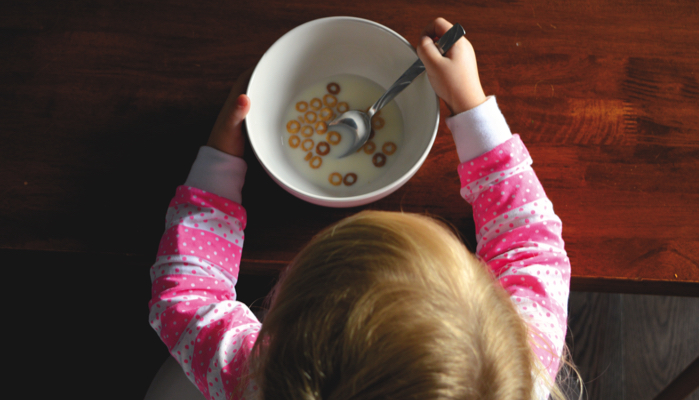
Regarding utensil use, tool use, shoveling, building and finger plays there are other ways to help a blind child develop these skills than to move their hands through the motions. Sounds are still available to the blind child – as well as touch. Here are some steps to show a blind child how to use a spoon:
-
- Before learning to use a spoon your child should have lots of experience and practice finger feeding. Your child should have experience using her hands before she is expected to use a tool like a spoon – so give her finger foods. Overcooked pasta and vegetables are conducive to eating with fingers. Of course your child should not be eating unattended. For a child without sight it can be helpful to use a highchair tray to keep the food within certain boundaries. Place the food where the hands often rest so your child will find the food by herself as much as possible. Use high contrast with your child if she has some vision (such as light colored pasta on a dark colored bowl).
- As you introduce solid foods, give your child her own spoon while you feed her with a second spoon. There should be no pressure or demands on your child at this stage for her to hold the spoon in a certain way. Simply place the spoon into your child’s palm. Your child may hold onto the spoon for a little while, bang it on the tray, mouth it, drop it, etc. Offer the spoon to your child two or three times with each meal. Dip the bowl of the spoon into the food so your child gets a taste of the food if she does happen to mouth that part of the spoon. Thickened foods that will stick to the spoon (even when the spoon is upside down or handle first) will help in this stage. One parent found that adding a little liquid to thickened foods helped the spoon to “sink” a little bit so that scooping was easier. Choices to consider include mashed potatoes, pizza put through a mill, applesauce, pudding, and softened ice cream come to mind.
- When you fill the spoon make a single scraping sound and bring the spoon right up to your child’s mouth. Hold it there so your child can smell and get ready for it.
- When you have given your child the bite of food do not scrape off any extra food off your child’s lips and mouth area (keep in mind that your child is paying attention to your actions and will imitate them later).
- Replace the spoon to the bowl making another auditory clue with a single “clink” of spoon on bowl. Again just one clink and try not to scrape around the bowl after every bite – your child is listening!
- Begin to be a bit slow with the spoon. Pause there longer at your child’s mouth and bumble a bit. Have a conversation with someone else or pretend to get very interested and/or busy with something else. Who knew parenting would require acting talent? Soon your child gets impatient and grabs the spoon. “Ah ha! I can do this better,” your child thinks, as she grabs for the spoon. This is a big step for the parent and your child. The parent must give the child a reason to take over if she has not already discovered a reason to try it herself. It is very rewarding to see a child begin to problem solve and discover for herself.
- Calmly let your child have your spoon and pick up the second spoon and get it ready for the next bite. Now you and your child will exchange spoons for a while. You may give her the first spoonful, but then you are only filling the spoon and waiting, your child has taken over the steps of holding the spoon and bringing it to her mouth.
- Gradually your child takes over more and more of the steps. Thickened foods with a little bit of liquid again help with the scooping process. Your child may use the spoon in one hand and their free hand as a scooper for the food. This is normal for all children. Learning to scoop can also be practiced with various toys and various settings such as the bathtub and sand box. Eating and learning to eat is a messy process, but sighted children are not any cleaner at it either. Eating with a spoon is learned through many opportunities and little steps – just like the sighted child.
NOTE: Later with using a fork, look for objects that make good sounds when they are pierced. That green florist foam makes a great sound and feel when it is stuck with a fork (even a dull child’s fork). This can provide a wonderful practice game for using a fork.
Feeding Resources
The book Coping with a Picky Eater by William G. Wilkoff, M.D. is a good resource for parents and teachers, particularly chapter 3, “A Few Ounces of Prevention.”
Related Posts
Feeding and Eating, Special Needs
Feeding Therapy Approaches for Infants with Special Needs
Many children with special needs have feeding difficulties. Working with a speech therapist, being patient, and experimenting with textures can help.

Eye Conditions and Syndromes, Support, Visual Impairment
Coping with a Diagnosis: Emotional Support for Families with Visually Impaired Children
Families with emotional support are more resilient. Learn how to establish emotional support with peers, professionals, and the community to help your family thrive.
Special Needs, Visual Impairment
Why Early Intervention Is Critical for Blind Children
Children diagnosed with visual processing disorders, low vision, or blindness need specialized treatment. Early intervention programs can help.