
Baby Fawn: A Story of Music, Community, and a School Built by Love


We recently added subtitles to a documentary filmed ten years ago, and I would love to invite you to watch it here.
This film, which I had the privilege to script, tells in images what feels like two fairy tales in one. It is the story of children learning music, but also the story of a school born from the love and determination of parents.
When Parents Dream a School Into Being
Is it easy for parents to build a school for their children, according to their own values?
Not at all.
In every country, bureaucracy can be discouraging. Where there is a will, there is often a “won’t” close at hand. And yet, when parents share a vision, something begins.
Our “Baby Fawn” school started small, as such stories often do. Ten, maybe twenty children. One or two kindergarten groups, close in age. Families connected through parish life, work, friendship, or simple proximity, all wishing for a kind of education they could not find elsewhere.
Opening a kindergarten is already a challenge, but easier than opening a full school. There are always practical questions: where will it be held, who will care for the children, how will everything be organized? Often, the answer comes through what is available, a rented space, or even a home offered by one of the founders.
Growing Together
Soon enough, the next question appears: what happens when the children grow?
Will they leave for district schools?
For us, the answer was clear: no.
And so the real work began.
Each year brought new needs: more teachers, more space, more structure, more care. Cooks, caretakers, medical requirements, endless logistics. It can feel like a Sisyphus task, always pushing forward.
And yet, something else happens, too.
When people are united in purpose, something like grace enters the story. At the right moments, solutions appear. Small miracles, one could say. When you truly know your mind and your heart, the universe begins to respond.
An Unexpected Gift
After ten years of continuous effort, something none of us had planned became possible.
The school was granted the status of a state-recognized high school.
This meant that the original children could continue their journey together. Their younger siblings could follow them. What began as a fragile, parent-led dream became something lasting, with a wider horizon.
The Spirit of the School
At the heart of this story was Adina, a teacher in the fullest and most beautiful sense of the word. But she was not alone. Every member of the staff brought something essential, each in their own way, with dedication and love.
Music played a central role in all of this.
It brought people together, created bonds, lifted spirits, and opened hearts. Through small performances and full concerts, the children found their way into the life of the city itself.
My Own Place in the Story
This story is also personal to me.
One of the founders is my nephew, father of three daughters I love dearly, now grown and studying in medical universities, and a son still in middle school, already a passionate young herbologist.
Through my nephew, I was invited to join the school as a volunteer, working with the children through music.
I played piano, bringing simple Mozart-inspired themes (what is sometimes called the “Mozart effect”), and added my own texts to these melodies. We sang, we listened, and we also worked with solfeggio, always keeping a balance between accuracy and joy.
Their favorite was La Tartine à Beurre, a playful song full of appetite and imagination, asking for bread with butter and all possible toppings, in rhyming delight.
Encouraged by their enthusiasm, I also introduced creative writing. This became my bridge into shaping the documentary itself, built from many recordings of the children’s voices and experiences.
A Life That Continues
The film was publicly launched on April 16, 2016, in the piano hall of my university library. The event honored:
- St. Antim Ivireanul, a scholar and spiritual patron
- Alfred Hollins, a remarkable blind musician and composer
This moment also marked ten years of my project Mo’zArtino, which began with Mozart-inspired work and continues today through arts projects for deaf children and my tactile music project for blind children.
A Final Thought
This story may sound like a fairy tale, but it is not.
It is a story of work, of worry, of persistence, and above all, of love.
And perhaps this is what remains: When parents, teachers, and children come together with a shared vision, something living begins to grow, like a young fawn finding its feet in the world.
Related Posts
Braille and Literacy
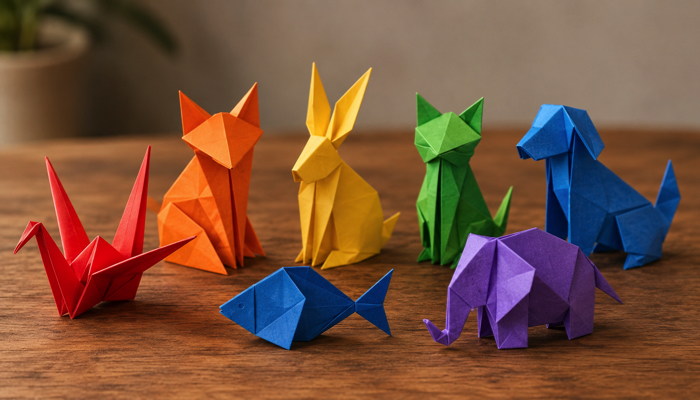
Fold, Feel, Read: How Origami Builds Pre-Braille Skills
Blind adult and origami enthusiast Lindy van der Merwe shares how paper folding can help blind children build important pre-braille skills, including tactile discrimination, spatial awareness, bilateral coordination, and active...

Braille and Literacy
3 Inclusive Creative Writing Games for Blind and Disabled Children
Three creative-writing games transform simple words, numbers, and stories into collaborative poems. These playful activities encourage imagination, teamwork, language development, and creative thinking while helping children discover that poetry can...

Braille and Literacy, Music Play, Special Needs, Visual Impairment
Braille needs allies. Music can be one of them.
An inspiring look at how music can support Braille literacy, creativity, and inclusion for blind children.