
Developmental Evaluation Forms: Why Are We Doing This Again???


Ah, yes. It’s that time again — another developmental evaluation form has landed in my lap. The questions are all too familiar, like a greatest hits album of tasks my child can’t do.
- Can your child tie their shoes?
- Can they walk up three steps?
- Can they respond to a simple one-step command?
And just like that, I get to check “no” over and over again.
Meanwhile, I’m over here celebrating because my kid made it through the day without needing rescue epilepsy meds. It’s not that I’m not proud of my son – of course I am – but these forms really seem designed to highlight everything he isn’t doing. What’s the prize for filling this out? A gold star for the most “no” answers?
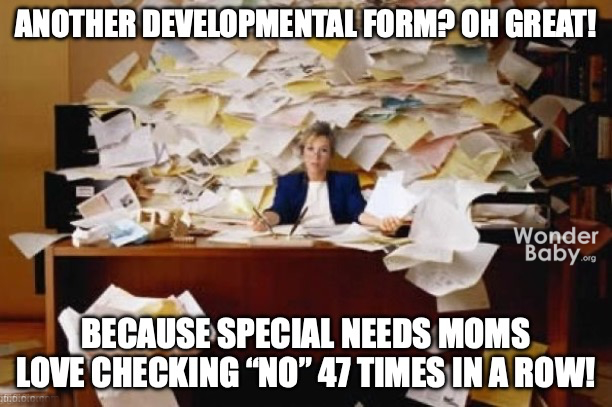
What’s more, it’s not like I only see these forms once a year. Oh no, they follow me everywhere: doctor’s offices, schools, therapy sessions. It’s like a recurring nightmare I can’t wake up from, except instead of scary clowns, it’s a list of developmentally appropriate milestones. Each time, it’s a fresh opportunity to be reminded that my child isn’t meeting the world’s expectations.
Why Developmental Forms Feel Like a Test You Didn’t Study For
Okay, let’s give these forms some credit. They mean well. They’re supposed to help the doctors, teachers, and therapists develop a clear picture of where your child is developmentally. But let’s be honest: it feels less like an “assessment,” and more like an exam you didn’t know you had, and now you’re staring at the questions like, “Wait, was I supposed to teach my child how to dress themselves by now? Did I miss that memo?”
These forms seem laser-focused on all the things our kids aren’t doing, leaving us feeling like we’re failing some kind of parenting pop quiz. One mom I know joked that she started answering, “Nope, but he can escape from a five-point harness like Houdini!” just to keep herself sane. Another parent told me she stared at the question, “Does your child respond to one-step commands?” and wondered, “Does ignoring me entirely count as a response?” Because if so, nailed it!
It’s easy to feel like you’re the only one flunking this parenting test but trust me, you’re not alone. Every parent in the special needs boat has had that sinking feeling, watching as the “no” boxes pile up and wondering if anyone else’s kid is secretly building Lego skyscrapers while reciting Shakespeare. Spoiler alert: They’re not. We’re all just trying to survive these forms with a shred of our dignity intact, even if it means laughing through the frustration.
Coping With These Forms Without Losing Your Mind (Too Much)

First things first: Don’t do this alone. Seriously. Grab a friend, a spouse, or even a pet, anyone who can sit with you as a buffer between you and the dreaded “no” boxes. If you’ve got a support person or advocate, even better. They can help you through the questions that make you want to throw the form out the window.
Another tip? Take breaks. Like, frequent breaks. Fill out a couple of those joy-crushing questions, then step away, grab a snack, watch a cat video, whatever it takes to reset your sanity. This isn’t a race. No one’s giving out medals for finishing these forms in one go, so pace yourself. Think of it as a marathon, not a sprint.
When you finally finish, it’s time to balance the scales. Grab a sheet of paper and write down everything your child can do, starting with the fun, quirky, and amazing things that never seem to make it onto the form. Can your child laugh so hard they snort? Put that down. Can they find a way to communicate exactly what they want without using words? That’s a win! The form doesn’t define your child’s worth. Your child is awesome just the way they are, and no form in the world can change that.
At the end of the day, these forms don’t tell the whole story. Success isn’t about ticking off milestones on someone else’s checklist. It’s about recognizing and celebrating your child’s unique strengths, whether they’re mastering the art of getting everyone to smile or finding joy in the little things that others might overlook. Your child’s journey may not fit neatly into boxes, but that’s okay because they’re writing their own unique story.
So when the forms are done remember this: Your love, your patience, and your dedication are what truly matter. You’re the expert on your child, and no form can measure the depth of your connection with them. Take a deep breath, hold on to hope, and keep celebrating everything that makes your child wonderfully, uniquely them.
Related Posts

Assistive Technology, Orientation and Mobility, Visual Impairment
A New Mobility Technology for Blind Users: Lumen Smart Glasses
Learn about Lumen smart glasses, an innovative assistive technology designed to help blind and visually impaired users navigate safely and independently.

Braille and Literacy, Music Play, Special Needs, Visual Impairment
Braille needs allies. Music can be one of them.
An inspiring look at how music can support Braille literacy, creativity, and inclusion for blind children.

Parenting, Special Needs
Love Languages for Kids With Disabilities: 5 You Might Miss
Learn 5 love languages you might miss in kids with disabilities and special needs, plus simple ways to recognize and respond to their unique signs of connection and affection.