
Should Blind Children Learn Print Letters?


The child laughs: My wisdom and my love is play.
The young man sings: My play and my wisdom is love.
The old man keeps silent: My love and my play is wisdom. — Lucian Blaga
These lines come from a much-loved Romanian poem by Lucian Blaga. In 2008, I made a short film on this topic for an international conference in Sofia, Bulgaria. It grew from my experience teaching a group of children English and music (and a good deal of extracurricular creativity, too).
The little girl you see in the video bravely learning to read and write print letters mastered the skill in just seven days — these were seven joyful vacation days we spent together. From morning until evening, we practiced everywhere: in her favorite parks in Timisoara, at the fountain she could wade in, near the bronze statues and cubes inscribed with raised letters, and in the children’s playgrounds she explored by touch and sound. We read, wrote, and told stories on benches, shared pizza downtown, and snacked on savory pies.
By the end, she wrote in her diary: “I am happy to read and write.” For her, this was more than a lesson; it was a dream fulfilled. She was the only totally blind child in her class and wanted to write on the blackboard like everyone else, to send letters to her parents and friends, and to feel included in the world of written words.
Learning print letters gave her a bridge to that world. She could even read store signs and window stickers written in raised capital letters. She wanted to do everything her sighted classmates did. She even rode a bike, following her mother’s voice as her guide.
Later, I also taught in a school for the deaf and hard of hearing. During an open house, their blind classmates came to visit. The children wanted to talk to each other, but communication was difficult. They needed translators to interpret speech and sign language. Could they connect directly? Yes… through print letters. If the blind students could write print letters on paper, and the deaf students could trace those same letters onto their friends’ palms, they could finally communicate.
This inspired two of my classes to create raised alphabet letters (made with soft velvet adhesive) so their blind classmates could learn to read and write them by touch. We recorded that project here. The goal was simple: at the next open house, they could talk directly—no translator needed.
Louis Braille himself learned print letters before creating his tactile code. He studied them for years at Valentin Haüy’s institute in Paris, writing letters to communicate with the sighted world long before Braille existed. When he later developed the dot system that bears his name, he didn’t replace print letters; he expanded the world of literacy.
In 1893, educator Frank Rainey, Superintendent of the Texas School for the Blind, made a passionate argument for teaching print letters to blind students:
“Why deny them seeing methods? Must a blind child grow to old age and die without ever knowing the shapes of the letters their mother used when reading a prayer aloud? Give this class of the blind at least a chance to lift themselves out of their own sphere, that they may live, not as objects of mystery, but as peers of any whom they may meet.”
For much of the 20th century, Braille was seen as the pinnacle of literacy for blind students—and it still is a cornerstone. But in the 21st century, new technology has changed learning habits. Many blind adults now rely on audio instead of Braille, and statistics suggest that only about one in ten continues to use Braille after leaving school.
This is not a reason to abandon Braille. Actually, it’s a call to strengthen it. Teaching print letters alongside Braille can expand a child’s understanding of language, literacy, and culture. It also helps build connections with sighted peers and the broader world. Knowing print letters can make a difference even in small ways. For example, understanding idioms like “cross your T’s and dot your I’s” depends on familiarity with print!
Teaching blind children multiple communication systems — Braille, print, tactile symbols, and even sign tracing — opens doors to inclusion, imagination, and independence. These are the foundations of empathy, creativity, and full participation in the human story.
As one writer once said: “Books may no longer save generations, but they can still save individuals in search of meaning.”
Related Posts
Braille and Literacy
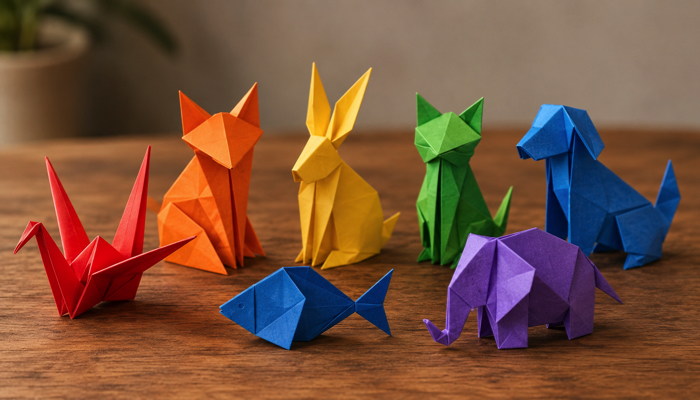
Fold, Feel, Read: How Origami Builds Pre-Braille Skills
Blind adult and origami enthusiast Lindy van der Merwe shares how paper folding can help blind children build important pre-braille skills, including tactile discrimination, spatial awareness, bilateral coordination, and active...

Braille and Literacy
3 Inclusive Creative Writing Games for Blind and Disabled Children
Three creative-writing games transform simple words, numbers, and stories into collaborative poems. These playful activities encourage imagination, teamwork, language development, and creative thinking while helping children discover that poetry can...

Assistive Technology, Orientation and Mobility, Visual Impairment
A New Mobility Technology for Blind Users: Lumen Smart Glasses
Learn about Lumen smart glasses, an innovative assistive technology designed to help blind and visually impaired users navigate safely and independently.