When I take my son Ivan on his daily morning walk we always follow the same route around the house and out into the yard. Since I’m trying to help Ivan understand where we are and where objects are located, we always stop and touch the same landmarks, like the rock wall that runs along the back of the property or the ti plant in the front yard. One morning as we were touching the ti plant, I said to Ivan, “The ti plant is wet because it rained last night. Everything outside is wet this morning.”
It occurred to me that I had talked about him being wet in the bath last night and that I had laughed and told him he had got himself all wet when he spilled his water at breakfast. I realized that Ivan encounters water in different forms all day long and that I need to help him understand that while each experience is different they all involve the same concept: Water.
I realized that without vision helping to connect these experiences, Ivan might be confused how all these things fit together. I thought about how Ivan may encounter water in the forms of touch, sound, or smell and that it’s my job to help Ivan connect these encounters. I wrote a list of water experiences Ivan has almost every day to help me explain these concepts to him. This is a great exercise and of course can be adapted to any number of concepts. Here’s our list for Water:
Drinking and spilling water at meal times
Bathing in water
Feeling that his washcloth is first dry then wet when he takes a bath
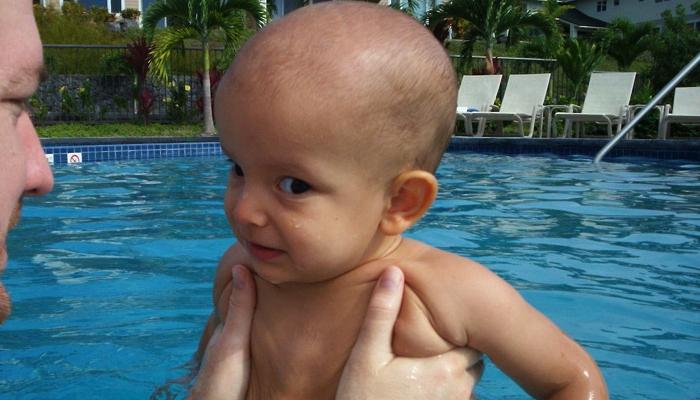
Going to the pool
Smelling the chlorine at the pool
Going to the beach
Smelling the salt water
Listening to the waves at the beach
Feeling the difference between wet and dry sand
Smelling the rain or dad water the yard
Walking out into the rain
Listening to the rain
Feeling that everything is wet after it rains
Feeling his sweaty brow on a hot day
Feeling his drool on his belly
Feeling and smelling his wet diaper
Hearing mom or dad take a shower
Hearing the toilet flush
Hearing the tea kettle whistle when we boil water for tea in the morning
Hearing mom or dad wash the dishes or wash their hands
Learn about Lumen smart glasses, an innovative assistive technology designed to help blind and visually impaired users navigate safely and independently.
Braille and Literacy, Music Play, Special Needs, Visual Impairment
Discover how blind children explore art through touch. Learn practical ways to support tactile creativity, build early Braille literacy, and nurture imagination with hands-on projects, textures, and accessible art experiences.