
5 Best Sensory Seeker Toys

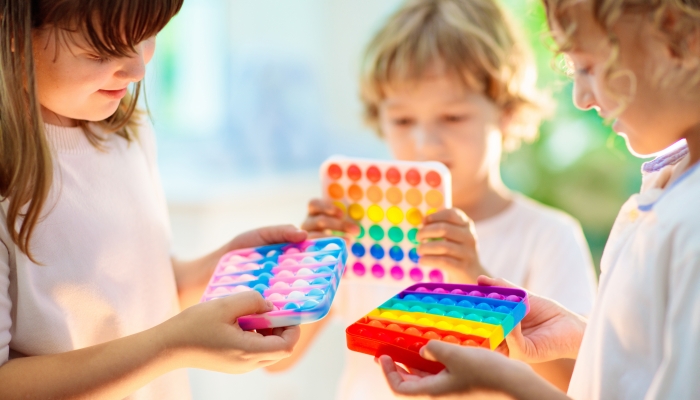
This post may contain affiliate links; please see our terms of use for details.
- Children who are sensory seekers look for sensory input through physical movement, tactile activities, or creating loud sounds.
- Sensory seeker toys engage a child’s preferred senses and help them to self-regulate, focus, and stay calm.
- Sensory seeker toys give kids an appropriate, enjoyable, and safe way to manage sensory input needs.
Children with autism, sensory processing disorder, ADHD, and other neurodiverse needs may engage in sensory-seeking behavior that helps them process the world around them.
Sensory seekers may rock, spin, hang upside down, or enjoy roughhousing. They may ask for tight hugs or prefer tight-fitting clothing. They may chew on their sleeves or other objects. Or they might like to make loud sounds.
Sensory-seeking behavior may be more pronounced in situations that kids find stressful, like being in a crowded place. Sensory toys provide kids with the tactile input, sensations, and materials they need to deal with challenging situations or feelings or just to help them calm down and focus.
Take a look at our guide to the best sensory seeker toys, what to look for, and how to choose them for your child.
Chew Necklace: Best for Kids Who Like to Chew
Children soothed by chewing often end up chewing on sleeves, clothes, pencils, or anything they happen to have in their hands. This can be messy, unsafe, and even embarrassing, especially for older kids.
This cool Chew Necklace is a discreet and stylish alternative. Made of non-toxic silicone, it comes in a huge variety of designs, textures, and styles. It’s tough, safe, and specifically designed for wearing and chewing.
No products found.
Always follow the manufacturer guidelines for age and use to avoid choking hazards with any kind of “chewelry.”
Tangle Jr. Classic: Best for Hand Fidgeting
No products found.
Tangle Jr. Classic is small, portable, and discrete for kids who fidget with their hands. Users appreciate that it’s not as noisy as fidget cubes or as distracting as a fidget spinner, and it’s good at keeping hands busy and minds focused.
The Tangle has a smooth hard surface and morphs into different shapes. Returning it to its original coil shape is also satisfying. It’s great for fidgeting and for developing motor skills and hand dexterity.
Tangle makes toys in different colors and textures so that your child can fidget with their favorite colors, designs, or metallics. They even make Furry Fidgets to add extra sensory input for kids who like fuzzy sensations too.
No products found.
There are many imitations on the market. Make sure you’re buying a well-made, sturdy toy that won’t break easily. These are for ages three and up.
Fat Brain Toys Teeter Popper: Best for Rocking and Spinning
If your child likes to rock, roll, tilt, and balance, their sensory-seeking behavior is about stimulating the vestibular system which is our sense of spatial awareness. The Fat Brain Toys Teeter Popper is a fabulous sensory toy for kids who like to move.
No products found.
Your child can sit or stand on it to rock and challenge their balance and build their core strength. They can also sit in it to spin.
The Teeter Popper has strong suction cups on the bottom of the rocker which make a fun popping sound that sensory-seeking kids love. The suction adds resistance, helping your child develop balance, strength, and gross motor skills.
It’s for ages three and up and can hold up to 110 pounds, so your child can play with this for a while.
Art3D Sensory Floor Tiles: Best Multi-Sensory Toy
No products found.
For a multi-sensory experience the whole family can interact with and enjoy, check out these Art3D Sensory Floor Tiles for tactile input and visual stimulation.
Your child just has to push on a liquid-filled tile with fingers, hands, feet, or even their whole body to watch the colors shift and change for a calming experience.
Kids love the squishy feeling of the liquid. Plus, these tiles are also super sturdy, so they can withstand jumping or multiple kids playing together.
The liquid is safe and non-toxic. Anti-slip backing for the tiles also means they won’t slip from under your child’s feet when they play, stand, or dance on them.
If your child likes to chew, a liquid-filled toy like this isn’t recommended, but it’s safe for children ages three and up.
Theo The Sensory Companion Dog: Best Toy for Comfort and Calming
No products found.
Theo The Sensory Companion Dog by Roylco is cute and cuddly, but he’s no ordinary stuffed animal. Theo’s floppy, soft body weighs 2.5 pounds and is the perfect size for laying on a lap or across your child’s shoulders.
Weighted toys like Theo are soothing for sensory-seeking children who may search for opportunities for firm pressure. Theo’s plush fur is soft and comforting. He also has a pocket in his tummy that holds a pack of lavender-scented ceramic beads which you can make hot or cold, for an extra soothing and calming sensation.
Take Theo to appointments, and unfamiliar places, or have him around at bedtime. He’s safe for children ages three and up.
What Is Sensory Seeking?
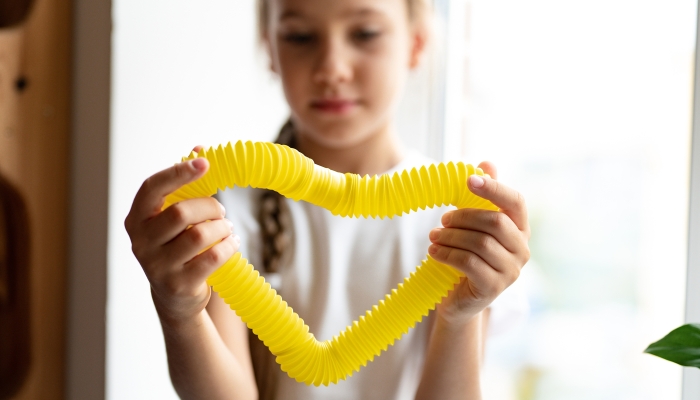
Children with sensory processing disorder, autism, ADHD, or other diagnoses may have challenges managing sensory input or have other sensory needs.
This means that taking in information from their senses—sight, sound, taste, smell, touch—can affect them differently than it does neurotypical children. Generally, sensory processing issues tend to fall into two categories: sensory seeking and sensory avoiding11. Morin, A.. Sensory seeking and sensory avoiding: What you need to know. Understood. https://www.understood.org/en/articles/sensory-seeking-and-sensory-avoiding-what-you-need-to-know.
Sensory-seeking kids tend to underreact to sensory information, so they look for objects or activities that give them more input. For example, sensory-seeking kids might like tight hugs or clothing or they might spin, rock, or be very physically active.
Sensory-avoiding kids tend to overreact to sensory information and find sensory input overwhelming. For example, a sensory-avoidant child might like headphones to block out environmental noise or they may prefer not to be touched by people.
For kids with sensory sensitivities, sensory toys can be useful tools for helping them to self-regulate, calm down, relax, focus, concentrate, and behave in socially appropriate ways by giving them a healthy and safe outlet for managing their sensory needs.
How Do Sensory Toys Help Kids With Sensory Issues?
Sensory toys and sensory play are beneficial for all children22. Palumbo, J. “Jay”. The Power Of Sensory Play In Childhood Development. Forbes. 2023. https://www.forbes.com/sites/jenniferpalumbo/2023/10/10/the-power-of-sensory-play-in-childhood-development/?sh=46fee54d4faa , regardless of whether they have sensory input issues. Engaging the senses through play is important for cognitive development.
Rich sensory environments help children create neural pathways for their future learning. According to Autism Speaks33. Esposito, A.. What are sensory toys and how do they help? Autism Speaks. 2023. https://www.autismspeaks.org/blog/what-sensory-toys , sensory toys benefit children who are sensory seekers or who have sensory processing issues by “helping them engage with their senses, provide feedback to their sensory systems, and regulate their sensory needs.“
By catering to a specific or preferred sensory need, sensory toys can help redirect a child’s focus to their other senses, help them calm down, and reduce their anxiety, allowing them to engage with family members or peers.
They can also reduce a child’s fear or frustration around a particular kind of sensory input, reducing their stress around sensory processing. For example, they can help parents and children avoid or manage sensory meltdown in unfamiliar public places.
How To Choose Sensory-Seeking Toys
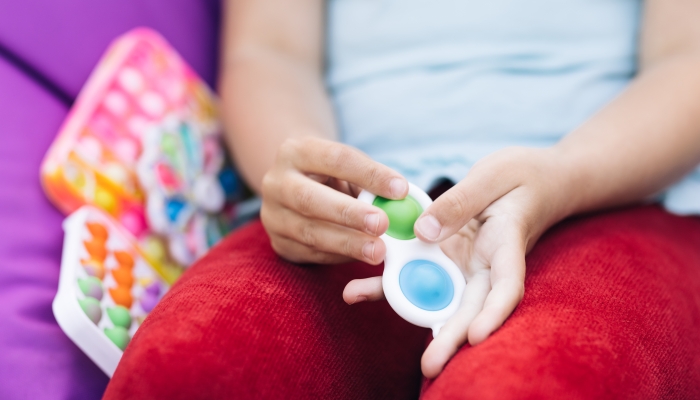
Every child’s sensory-seeking needs are different. Many toys are marketed as “sensory.” However, they won’t all be appropriate for every child, so it’s important to consider your child’s specific needs.
Here are a few things to consider when choosing sensory-seeking toys:
| Safety |
|
| Your child’s age |
|
| Your child’s sensory needs |
|
References
- Morin, A. (n.d.). Sensory seeking and sensory avoiding: What you need to know. Understood. https://www.understood.org/en/articles/sensory-seeking-and-sensory-avoiding-what-you-need-to-know
- Palumbo, J. “Jay.” (2023, October 10). The Power Of Sensory Play In Childhood Development. Forbes. https://www.forbes.com/sites/jenniferpalumbo/2023/10/10/the-power-of-sensory-play-in-childhood-development/?sh=46fee54d4faa
- Esposito, A. (n.d.). What are sensory toys and how do they help? Autism Speaks. https://www.autismspeaks.org/blog/what-sensory-toys
Related Posts
Braille and Literacy, Toys, Visual Impairment
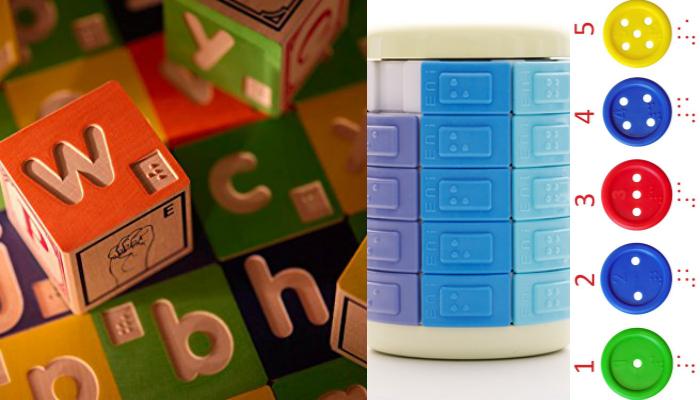
24 Braille Toys for Kids Who are Blind
Everything from alphabet blocks to raised line coloring pages and activity books to puzzles to card and board games... and so much more! And it's all in braille ready for...
Autism
Developing Time Management Skills in Children with Autism: 7 Tips
Learn how you can use structure and visual aids to help your child with autism learn time management skills.

Autism
Occupational Therapy for Children with Autism: How It Can Make a Difference
Children with autism face challenges in many different areas. Occupational therapy can help children address these difficulties while having fun!