
Why it’s OK to Ask Me About My Special Needs Child

Our culture is one of show and tell. Kylie Jenner did what? To what part of her body? We look. I look. A paleo blogger tweets about the breakfast she made. She shares. I look. As a society we “share,” “tweet” and “update” people about our lives. We share. People look.
Whether we like it or not, people also look at our differently-abled kids. They may draw attention for their assistive devices, the way they look, or how they behave.
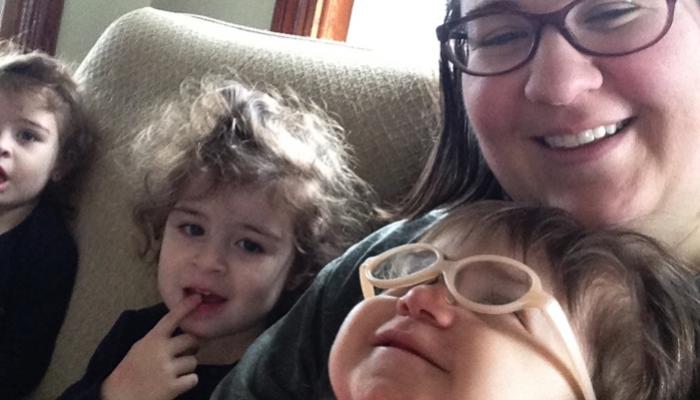
I am not surprised when we’re in public and people look at Shelby. People love to comment on two things about Shelby: her glasses, “Oh she has taken off her glasses! You should fix them,” or it is her left eye which doesn’t face forward and all you see is the white, “Someone is sleepy!” These comments irritate me and I’m starting to think they shouldn’t because before I had Shelby I never understood “special needs things.” How can I expect others who don’t have a special needs child in their life to not stare or be curious? (I can expect them not to be rude.) I’m rethinking my role and my response to onlookers.
We all benefit from empathy ripples
I’m starting to wish people would just come up to me and ask, in a polite and kind way, “Your daughter is beautiful! I noticed she has an eye condition. Would you tell me about it?”
Why would I wish this upon myself? How else will people learn about CHARGE syndrome if I don’t tell them? And how else will these onlookers learn empathy for my daughter and her friends if I don’t enlighten them? When strangers hear our family’s story I want them to be more empathetic to other special needs kids they come across after our encounter. When I share about Shelby and her “Shelbyness” I’m breaking down walls and misconceptions; I’m dropping a pebble in a pond and creating ripples, empathy ripples. I hope that other parents of special needs kids begin to openly share when people stare or comment so that I’ll be the recipient of their empathy ripples as well.
I know nothing about autism. A friend at a parent seminar told the group how her autistic son had a meltown during a shopping trip. I now have a new appreciation for what she goes through and in the future I’ll be more tender hearted if I see any kid, autistic or not, having a meltdown. Empathy ripple.
I’m more than an Advocate… I’m an Ambassador
How am I rethinking my role? For starters I’m expanding my job description, I’m already Shelby’s Advocate; but I’m adding the title of Ambassador. It is my role to, in a dignified way, educate others about being deafblind and how this shapes but doesn’t define my Shelby Peach. I may be called to represent her and her needs to strangers, educators or even family, but I don’t mind especially if it creates an empathy ripple.
Another way I can be Shelby’s Ambassador is by not using my Facebook status as a place to post a sassy passive aggressive response to the insensitive person at the supermarket… “She’s not sleepy, she’s blind!” I’m using Facebook to create empathy ripples. A recent post encouraged my friends to contact their US Representatives and ask them to support the Cogswell-Macy act because it affects Shelby’s education. (All of our kids’ educations! You can support the act here).
I’m excited to view myself as an Ambassador. It is so empowering! And if I don’t feel like I’m making enough empathy ripples maybe I’ll just buy some custom-made buttons on Etsy that say, “It’s ok to ask me about my child”.
Nicole Feeney writes about how God grew the Feeney family from two to four to five in two quick years… and the subsequent adventures on her blog, Fab Feeney Five.
Related Posts

Parenting
Why Music and Multisensory Learning Matter for Blind Children
WonderBaby founder Amber Bobnar shares thoughts on Braille literacy, multisensory learning, tactile education, and music accessibility for blind and disabled children.

Assistive Technology, Orientation and Mobility, Visual Impairment
A New Mobility Technology for Blind Users: Lumen Smart Glasses
Learn about Lumen smart glasses, an innovative assistive technology designed to help blind and visually impaired users navigate safely and independently.

Braille and Literacy, Music Play, Special Needs, Visual Impairment
Braille needs allies. Music can be one of them.
An inspiring look at how music can support Braille literacy, creativity, and inclusion for blind children.