
5 Best Bedwetting Alarms of 2023

This post may contain affiliate links; please see our terms of use for details.
- Bedwetting is very common, and many children stop bedwetting naturally between the ages of 5 and 7 without intervention.
- If your child is old enough and showing concern about bedwetting, consider a bedwetting alarm.
- Clinical studies have shown that bedwetting alarms are an effective treatment for children between the ages of 5 and 7.
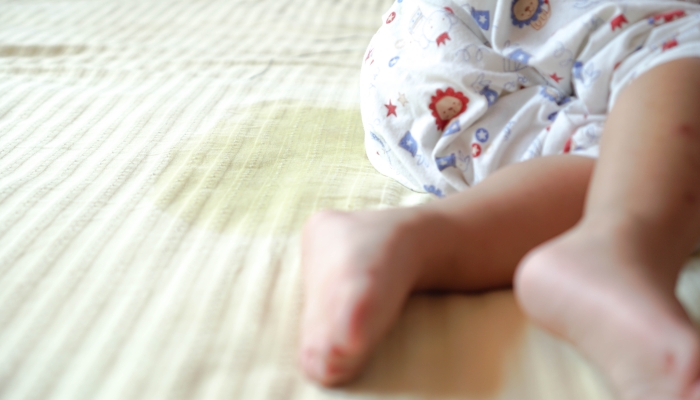
After all the work of potty training, washing urine-soaked sheets and wet pajamas may be discouraging for you and your child—but it shouldn’t be! It’s completely natural for a child who’s potty trained by age 3 to still wet the bed at night for a few more years.
Many children don’t attain nighttime dryness until ages 5 to 7. However, if your child is starting to be embarrassed or upset about bedwetting, or if they’re 7 or older and still struggling to stay dry, a bedwetting alarm can help.
Take a look at our guide to the best bedwetting alarms of 2023 to find the right one for your child.
Table could not be displayed.Our Choice: DryEasy 2 Bedwetting Alarm
No products found.
|
|
The best bedwetting alarm is one that’s easy for your child to use and that’s priced reasonably. If you’re trying to help your child through the tricky transition to nighttime dryness, try our top choice, the DryEasy 2 Bedwetting Alarm.
Although it’s a basic alarm without the extras of others on this list, it’s still a high-quality product. With an extra sensitive sensor that attaches to your child’s briefs, it claims to go off at even the slightest hint of moisture.
The alarm box has six different alarm sounds and vibration, but unlike some other wearable alarms, you can control the volume to suit your child’s needs. Weighing only 36 grams (just over 1 ounce), it’s very light and can be worn comfortably on your child’s pajama top or with the included armband.
For a useful device to help your child successfully through their bedwetting phase, the DryEasy 2 really is an easy option.
Try the wireless version: DryEasy Plus Wireless Bedwetting Alarm
No products found.
Power Source: Battery Powered | Item Weight: 1.27 ounces
View on Amazon | View on eBay.com
Most Accurate Alarm: Malem Ultimate Pro Bedwetting Alarm
No products found.
|
|
The Malem Ultimate Pro Bedwetting Alarm comes from a trusted brand of highly recommended bedwetting alarms and accessories.
The Malem Ultimate Pro works like other alarms, with a sensor in the briefs attached to a wearable alarm. However, the difference is that the sensor has Quick Detect technology, which means it can detect the slightest drop of moisture. So, it wakes your child in time for them to get to the bathroom.
Parents also appreciate the different sounds, vibration, and volume. Although this may seem like just a functional bed wetting alarm, parents report that it’s worth the price because they trust it to work and to work well.
Power Source: Battery Powered | Item Weight: 1 ounce
View on Amazon | View on BedwettingStore.com | View on eBay.com
Best for Deep Sleepers: Chummie Premium Bedwetting Treatment System
No products found.
|
|
Parents of deep sleepers and kids experiencing significant bedwetting rave about the Chummie Premium Bedwetting Treatment System.
The Chummie bedwetting alarm works like other alarms. It has a sensor that you attach to the outside of your child’s underwear which detects urine and sets off a wearable alarm on their shirt or armband.
However, a few things set it apart. First, it uses sound, vibration and light to wake your child. There are 8 different sounds to rotate through so that deep sleepers don’t get used to just one.
The sensor is also larger and made of flexible silicone. It’s more comfortable to wear and can also pick up moisture over a larger area. It gives your child a better chance of waking up before they have an accident.
While parents are pleased with the Chummie’s results, be warned that it does not attach easily to underwear. The tape supplied does not keep the sensor in place. Parents report using cello tape or having the child wear two pairs of underwear. This may not be the most comfortable option for all kids.
Power Source: Battery Powered | Item Weight: 1 ounce
View on Amazon | View on Walmart.com | View on buybuyBABY.com
Best for Older Children and Chronic Bedwetting: TheraPee
No products found.
|
|
For parents of older children for whom bedwetting has become a chronic and embarrassing problem affecting their self-esteem, TheraPee may be worth the investment.
TheraPee’s sensor is a large moisture detecting pad that goes under your child’s sheet. Wetness triggers a bedside alarm. This is a good option if a wearable sensor isn’t for you or your child.
In addition to the bedwetting alarm, TheraPee comes with software and online access to cognitive behavioral therapy videos, personalized to your child based on their progress.
Parents often report that, as a result, TheraPee has worked for them when medication and other techniques have not.
Although it’s expensive and requires commitment, the holistic approach of the TheraPee system can be life-changing for an older child.
Power Source: Battery Powered | Item Weight: 24 ounces
View on Amazon | View on Walmart.com | View on Sears.com
Best Basic Bedwetting Alarm: Wet Stop 3+
No products found.
|
|
The Wet Stop 3+ is an an easy-to-use, inexpensive bedwetting alarm that does what it says. This simple device has a small sensor worn in your child’s underwear. A wire connects it to an alarm worn on your child’s shoulder.
The alarm uses different sounds and vibration to wake your child. Parents find the included Complete Bedwetting Book helpful for establishing daytime habits that help children stay dry at night. The fun progress chart also helps children see how well they’re doing.
However, be aware that the sensor is very small compared to others on the market. This may mean your child has to produce a lot of urine before the sensor detects it. It also uses cumbersome conventional batteries, which you’ll need to check.
Parents who have used it report good results, though, so this basic alarm may be worth a try.
Power Source: Battery Powered | Item Weight: 3.87 ounces
View on Amazon | View on Walmart.com | View on Sears.com
How to Use a Bedwetting Alarm
Before deciding whether a bedwetting alarm is right for your child, let’s take a look at what bedwetting is all about.
Is there cause for alarm?
Many children up to the age of 5 experience primary nocturnal enuresis. This complex-sounding term refers to bedwetting that occurs at night in children who have not yet attained nighttime bladder control but are reaching the age when you can expect it.
Most children up to the age of 5 will not be dry at night. Between the ages of 5 and 7, many children stop wetting the bed naturally. However, a few kids will still struggle with it after age 7.
Bedwetting in children of this age is common and not generally a cause for concern. Many children outgrow bed wetting without parents having to intervene at all. However, if your child is a deep sleeper or is feeling embarrassed about not having dry nights, a bedwetting alarm may be helpful.
Is your child ready to use an alarm?
To get the best results from a bedwetting alarm, your child needs to be ready to use it. They need to understand what it does and what it’s for. They also need to be old enough to be motivated to stop bedwetting.
If you don’t think your child is ready to tackle nighttime dryness with an alarm just yet, consider trying these tips to help with nighttime accidents:
- Limiting fluid intake before bedtime.
- Using the bathroom before bed and not going to sleep with a full bladder.
- Using pull-ups for older bedwetters.
- Fitting a mattress protector or using disposable mattress pads.
- Talking to your child about bedwetting in a non-judgmental way to motivate them for nighttime potty training.
How does a bedwetting alarm work?
Most bedwetting alarms consist of a moisture sensor that attaches to your child’s pajamas or underwear in the area that is likely to get wet.
When your child urinates, the sensor triggers an alarm that either makes a noise, vibrates, or both. The alarm wakes your child so that they’ll go to the bathroom to finish urinating.
The idea behind bedwetting alarms is to get your child into a routine at night. It teaches them to wake up when they feel the urge to urinate.
The learning process can take 4 to 6 weeks, and within about three months, your child should be waking on their own to urinate. So while an alarm can be an effective bedwetting treatment, it requires commitment from parents and children.
A bedwetting alarm, when used consistently over time, can help deep sleepers and older children stay dry at night once they have learned to recognize the need to urinate when they’re asleep.
When to See Your Child’s Doctor
Bedwetting is a typical development hurdle for most young children. However, in some cases, it can be a sign of other issues like sleep apnea or a urinary tract infection.
If your child was dry at night but has started to wet the bed again, or if you have other concerns, it’s a good idea to talk to your doctor.
Choosing the Right Bedwetting Alarm for Your Child
When choosing a bedwetting alarm, check the following features to decide which would be most comfortable for you:
| Regular or specialized briefs? |
|
| Wearable or wireless? |
|
| Sound or vibration? |
|
| How do you turn it off? |
|

Related Posts

Product Reviews, Sleep
Penny’s Pixies: Soft Pajamas That Help Kids Dress More Independently
Penny’s Pixies creates soft, sensory-friendly bamboo pajamas designed to help children dress more independently, including a tactile Braille “FRT” front indicator so blind and visually impaired children can identify the...
Product Reviews
4 Best Infant First Aid Kits
Having a high-quality and well-stocked infant first aid kit can give you peace of mind and confidence in your ability to care for your kids at home.
Product Reviews
9 Best Toys to Keep Kids Active
Looking for active toys to keep your kids moving? Have kids who never seem to burn off their energy? Read our guide to our favorite active play toys.