
Rainbow Activities for Blind Children


How do you explain a rainbow to a child that has never seen one, let alone never seen colors? It may seem complicated to teach in such a way that your blind child may truly understand, but don’t let those notions hold your child back from learning about color and natural visual aspects of the world.
Use the Other Senses to Interpret the Visuals
A multi-sensory approach can be the best way to bring an image (or classroom lesson) to life by combining some or all of the senses to build a comprehensive representation! Colors can be represented by a scent or taste: Strawberries for red or limes for green, for example. Ever think about “touching” color? When you see a red ember in the fire, you think HOT! Temperature can represent colors just as well (but be careful!) where red means hot and blue is cold, or perhaps white is cold. But be creative and flexible with your translations. There are various examples of things that contradict each other, like fresh cold strawberries with white whipped cream, or the warm blue waters of a tropical beach.
Explain what a rainbow is using tactile pictures and verbal descriptions; then, teach the science concepts behind how it’s formed and just why they grace our blue sky overhead from time to time.
Step 1
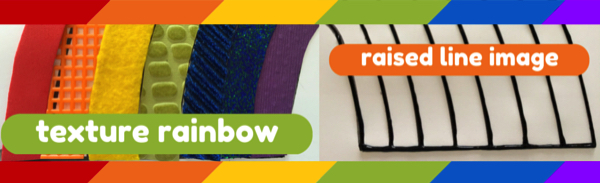
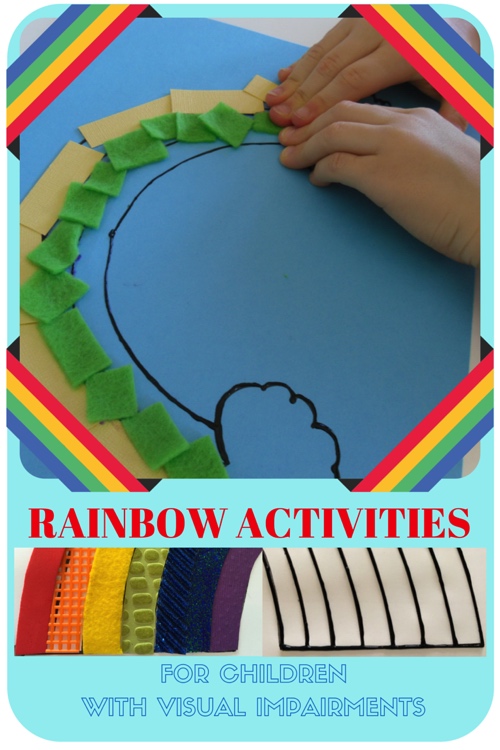
Pictures can be made into tactile images using craft supplies or an embossing printer so that the child can actually touch the curving arched shape of a whole rainbow, and the seven different bands of color that pop out against the blue sky background. Print this page (PDF) of a basic rainbow and make your own picture for your child to explore with his hands. Try using a different textured paper for each color and/or use puffy paints for the outline. You can also use cotton balls or white pompoms to make clouds. Be creative!
Step 2
Take time to describe the curve of the arch as your child runs his hands and fingers over the tactile graphic. Use sound effects and make it fun! Put names with each textured band of color as he runs his fingers horizontally across the base of the rainbow. Try helping your child remember the order of the visible color spectrum found repeatedly in rainbows using the acronym “ROY G BIV,” which stands for “Red Orange Yellow Green Blue Indigo Violet.” There are numerous resources available online to learn more about ROYGBIV but our favorite is this “They Might Be Giants” song depicting ROYGBIV as a person on YouTube!
Step 3
Follow up the activity with fun supplemental materials such as reading a book about rainbows like Color Dance by Ann Jonas, or watching this audio described episode of The Magic School Bus Makes a Rainbow available via the Described and Captioned Media Program (you’ll need to login with DCMP to watch).
Take Time to Explore Freely
Is there a rainbow out now that the rain has passed? Go outside and have your child reach up as high as she can, then explain that the rainbow is even higher! Talk about how the air feels. Maybe it’s warm and muggy now that the summer thundershower has moved along. Then the next time you tell her, “There’s a rainbow in the sky!” she’ll remember this time and though she may never know what it’s like to actually see a rainbow, she’ll have her own understanding of what it’s like when a rainbow is in the sky, with a memory of touching the tactile arched bands on paper, feeling the humid air, and reaching her hands up high.
Take the time to explore the setting and environment around visual elements like rainbows in the world. Doing so will help your child learn more about his environment he’s surrounded by at home, school, and outside, while building foundational skills for learning to use his senses effectively.

If you enjoyed this article, you may also like Accessible STEM: An Introduction to Light for Blind Children. You can find more accessible STEM activities for children with visual impairments on the Perkins eLearning Website, or adapt your own ideas with ideas from the WonderBaby Math & Science Activities Pinterest Board.
Related Posts
Eye Conditions and Syndromes, Visual Impairment
Neuralink Announces Plans to Restore Sight to the Blind with Brain Chip
Elon Musk’s company Neuralink has announced plans to begin human trials of its new “Blindsight” brain chip by the end of 2025.

Visual Impairment
The Gift of Understanding: How a Young Child Helps His Blind Father Navigate Life
When a parent is blind, it’s natural for people to wonder how their sighted child will adapt. Will they struggle to understand their parent’s needs? Will they feel burdened by...
Braille and Literacy, Toys, Visual Impairment
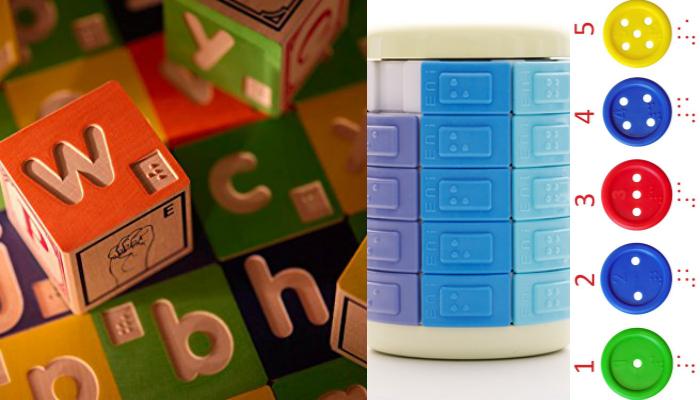
24 Braille Toys for Kids Who are Blind
Everything from alphabet blocks to raised line coloring pages and activity books to puzzles to card and board games... and so much more! And it's all in braille ready for...