
Getting a Special Needs Bed Funded Through Insurance

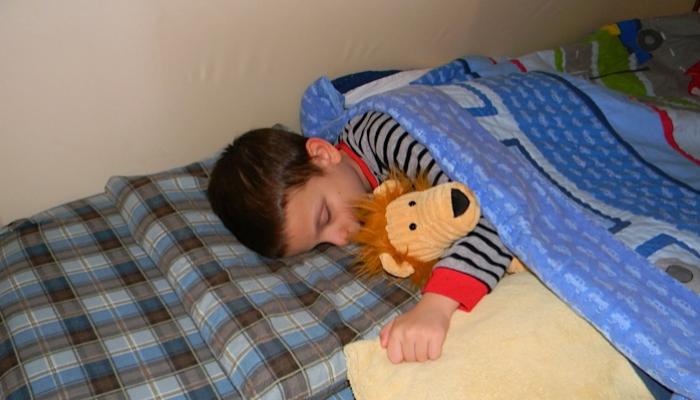
Does your child need a special bed in order to be safe at night? There are many different options, like the Sleepsafe Bed (our favorite) or the hospital beds from Pedicraft.
Of course these beds are prohibitively expensive, so most of us require our insurance to cover them. But how can you convince an insurance company that your child really does need a special bed?
A good first start is to get as many letters written as you can. You can write a letter yourself and so can your child’s teacher, PT or pediatrician. If your child has any issues that are relevant to sleep, get those doctors to write letters too. For example, does your child have terrible sleep apnea or reflux and require a sloped mattress? Have your pulmonologist or gastroenterologist write a letter, too. You can never have too many letters!
This may also be a good time to ask for new evaluations or to print up the reports from recent ones. Again, look at the specific reasons behind your request for the bed and have evaluations or tests done in the areas relevant to the request. For us, this meant having a physical therapy evaluation that showed that Ivan has difficulty moving around on his own and gets trapped easily in crib or other types of rails; for other kids it might mean getting a behavioral eval or sleep study.
Writing Your Letter
Need help writing your letter? Check out Complex Child for their recommendations. Try to clearly focus on the medical reasons why your child needs a special bed and why commercially available beds aren’t sufficient. Also be very clear about the aspects of the special bed that you need, in our case this was the high rails and padding.
Below is a copy of the letter we sent to the insurance company. Use it as an example while writing your own letter:
To whom it may concern,
Our son Ivan is 4 ½ years old with diagnoses of Leber’s congenital amaurosis, Joubert syndrome and seizure disorder. He has had a growth spurt and no longer fits in his commercially available crib. Ivan has recently pulled up onto his knees while in his crib and he is at high risk to fall out of the crib and injure himself and is in need of a bed with high rails. He does not sleep through the night and wakes up frequently during the night. He also moves around a lot at night, kicking his legs and rapidly moving his arms and head. This has resulted in him getting bruises on his head or extremities and getting his legs and arms caught in the crib rails. We have been able to get his extremities out of the crib rails with difficulty. Commercially available crib bumper pads do not adequately protect him and he is in need of a bed that is padded and designed to prevent entrapment.
In addition, Ivan is not able to sleep on a mattress on the floor because he falls off the mattress and is unable to get back on the mattress independently. Due to his complete lack of sight, it is not safe for him to be rolling or scooting about his bedroom or the house during the night. He does not have the functional mobility or cognitive/behavioral skills to stay in a regular bed with child rails. Due to physical, cognitive/behavioral issues, Ivan needs a safety bed because a regular bed will not meet his needs.
We are requesting a SleepSafe bed with high rails and padded bumpers for Ivan.
Choosing a Bed
Watch this video of Ivan in his Sleepsafe Bed to help you decide if this bed is best for your child:
Related Posts
Product Reviews, Sleep
Penny’s Pixies: Soft Pajamas That Help Kids Dress More Independently
Penny’s Pixies creates soft, sensory-friendly bamboo pajamas designed to help children dress more independently, including a tactile Braille “FRT” front indicator so blind and visually impaired children can identify the...

Assistive Technology, Orientation and Mobility, Visual Impairment
A New Mobility Technology for Blind Users: Lumen Smart Glasses
Learn about Lumen smart glasses, an innovative assistive technology designed to help blind and visually impaired users navigate safely and independently.

Braille and Literacy, Music Play, Special Needs, Visual Impairment
Braille needs allies. Music can be one of them.
An inspiring look at how music can support Braille literacy, creativity, and inclusion for blind children.