
Creating Inclusive School Festivals: When Every Child Shines


“All the world’s a stage,
And all the men and women merely players;
They have their exits and their entrances,
And one man in his time plays many parts.”
— William Shakespeare, As You Like It
We adults may sometimes feel like actors in life’s great theater, improvising our way through joy and struggle, learning our lines as we go. But for a child, stepping onto a stage during a school festival isn’t just playacting. It’s a magical world of music, color, and imagination, a first chance to express themselves, to be seen and celebrated, and to feel the joy of belonging.
For children with disabilities, inclusive school performances can be especially powerful. A well-designed show allows every child to participate, not by changing who they are, but by shaping the stage around their strengths. Whether through movement, music, or sign language, each performer finds their moment to shine.
Inventing the Inclusive Show
Years ago, I created what I call an inclusive show, a performance format that allows all children, regardless of ability, to take part with confidence. The idea was simple: the text of the play is pre-recorded and displayed on a large screen behind the performers. This means that children who are deaf can read along in real time, and those who are blind can listen to the recorded narration while taking part in pantomime or musical movement.
Everyone (on stage and in the audience) can follow the story clearly. The result is a kind of live “storybook” where sound, sight, and gesture come together.
My first inclusive show was called Mozartel, written for Stardust, a local theater festival for children with special needs. Three deaf high school girls performed it as a pantomime with sign language, while the recorded text played aloud for their blind classmates in the audience. We also projected the words on a large screen, an experiment that proved both fun and freeing.
The show was later restaged at Children in Europe, a mainstream theater festival, where it received a special jury prize. You can see that first version here: Watch the performance on YouTube.
And the later puppet-show adaptation, where I composed and played the music myself, here: Watch the puppet show.
Bringing Stories to Life with Sun, Moon, Star
More recently, I translated my own poem Sun, Moon, Star for English teachers and their students, so that schools could explore inclusive performances through familiar stories and songs.
The accompanying album includes music that can be played by students on piano or other instruments. The songs are simple yet meaningful pieces that reinforce rhythm, melody, and teamwork. The scores can even be used as tactile puzzles for blind learners: musical “riddles” that challenge the ear and the imagination.
My illustrations, too, are part of the lesson. They use bright, traditional Byzantine colors that reflect the emotional power of music. Teachers working with blind students can trace the outlines in relief and describe the colors aloud (cherry red, banana yellow, grass green, sky blue), transforming each page into a sensory experience.
Art, like music, must heal to be true art.
The Power of Rhymes and Words
The lyrics in my work are intentionally didactic, not to lecture, but to teach through joy. Rhymes and songs build language, memory, and emotional connection. When children sing, they learn words they might never hear otherwise: simple treasures that belong to their cultural heritage.
For children with disabilities, especially those with visual or hearing differences, rhyme and rhythm are more than just literary tools; they are bridges to communication. Teachers and parents can use these verses to expand vocabulary, spark creativity, and nurture self-expression.
Language itself is a living treasure chest. Each word forgotten is a color lost from our shared palette. Through song and poetry, we keep that color alive.
Give Jack His Play
When I was young, I toured with a traveling theater troupe, playing children’s roles in a popular play. Later, in high school, I chose to work as a prompter, the one who helps others shine. Those early experiences taught me something vital: children naturally find their place in a team when given the freedom to explore.
Years later, teaching at a school for blind and low-vision students, I staged scenes from Mozart’s Bastien and Bastienne. I watched the same magic unfold as children stepped into the light, discovering themselves through play.
A school festival isn’t just a performance; it’s an act of community. It’s where children show who they can be and parents often glimpse, for the first time, the full measure of their child’s spirit.
Let the Muse Take the Stage
Education and theater have always been close companions. Music drives emotion, dialogue, and understanding. As Shakespeare’s Hamlet reminds us:
“What a piece of work is man!
How noble in reason! How infinite in faculty!
In form and moving how express and admirable!
In action how like an angel, in apprehension how like a god!”Let us give children that stage, not just to act, but to be. To find themselves reflected in the applause, to feel that they belong, and to discover that learning and joy can share the same spotlight.
Related Posts
Braille and Literacy
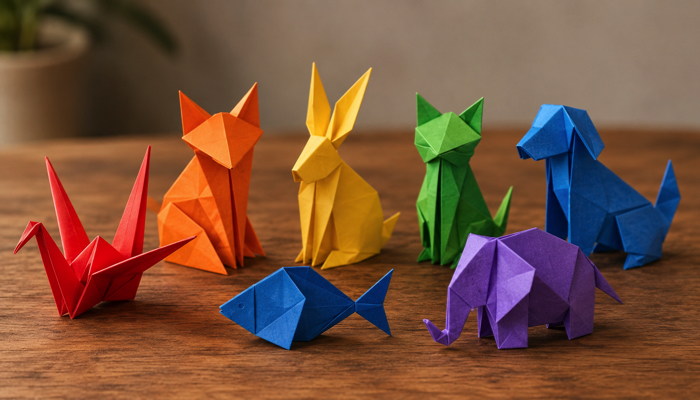
Fold, Feel, Read: How Origami Builds Pre-Braille Skills
Blind adult and origami enthusiast Lindy van der Merwe shares how paper folding can help blind children build important pre-braille skills, including tactile discrimination, spatial awareness, bilateral coordination, and active...

Braille and Literacy
3 Inclusive Creative Writing Games for Blind and Disabled Children
Three creative-writing games transform simple words, numbers, and stories into collaborative poems. These playful activities encourage imagination, teamwork, language development, and creative thinking while helping children discover that poetry can...

Education
Baby Fawn: A Story of Music, Community, and a School Built by Love
Learn how a parent-led school grew from a small kindergarten into a thriving community, using music, creativity, and collaboration to support children.