
Choosing the Best Toys for Your Blind Baby

This post may contain affiliate links; please see our terms of use for details.
It is possible to find toys designed specifically for blind children. American Printing House for the Blind (APH), for example, has some really cool things you can buy for your blind child. However, most of these are for older children and are often very expensive, so when it comes to baby toys, you’re probably going to find yourself purchasing toys originally designed for sighted children.
How do you know which toys will work best for your baby? Here are some of our favorite toys as well as some tips on how to choose the best toys for babies who are blind.
Our Favorite Toys for Blind Babies
These are Ivan’s top picks for toys. Most of them are available through Amazon. For more toy ideas check out our articles on Toys for Toddlers or making your own Scented Rattle and Toy Basket. You can also read our article on how to choose the best toys for your blind child or check out some of our favorite Holiday gifts. If you have a great toy you want to add to the list, contact us and let us know!
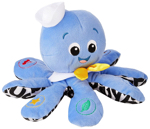
We first saw this toy at the Perkins Infant and Toddler program. Each leg of the octopus names a color and plays a musical chime with just a soft tap. It’s a very sweet sounding toy that doesn’t take too much pressure to activate and also includes volume control. It’s a great way to teach babies about cause and effect.
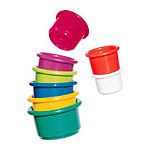
These cups are simple, safe, and sturdy. They’re great for enhancing fine motor skills. Use them to introduce the concepts of “big” and “little,” “in” and “out,” etc.
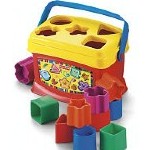 Fisher Price Baby’s First Blocks
These blocks are great for encouraging your child to pick things up. The bucket has a sorting top and is a wonderful way to introduce putting things in and taking things out.
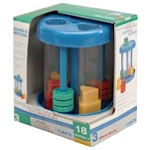 Battat Sound Puzzle Box
If you’re looking for a shape sorter with a bit more pizzazz, you’ll definitely want to check out this Sound Puzzle Box. I’m not sure how they do it, but every time you place a block in the correct hole, it slowly falls down the chute and makes a unique noise, so for kids with vision impairments there’s some added incentive to getting those shapes in the puzzle box!
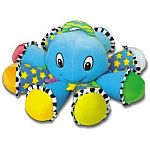
Each leg on this octopus plays a note when squeezed, but my favorite thing about the Octotunes is that it smells like vanilla!
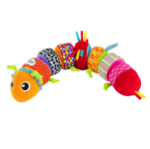 Lamaze Mix & Match Caterpillar
Each section on this caterpillar provides some sort of feedback, whether it’s a rattling bell, a squeeze sound, or a crunchy texture. Each piece of the caterpillar also comes apart so you can move them around or even play with them individually.
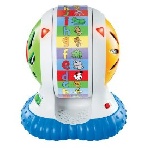 LeapFrog Spin and Sing Alphabet Zoo
The Alphabet Zoo makes music when you tap or spin it. It also plays the ABC song and will play a different sound for each animal pictured. It’s a great way to learn about cause and effect and funny animal sounds.
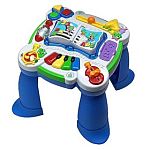
The learning table does a lot of things—too many, maybe, for a young baby. But Ivan likes to sit on one end and smack the table to make it sing the ABC song or tell him about shapes (you can remove the legs and set the table on the floor). He’s learned about object permanence with this table because he knows which parts of the table will provide what feedback. It’ll also be a great toy to play with when he learns how to stand!
Related Posts

Assistive Technology, Orientation and Mobility, Visual Impairment
A New Mobility Technology for Blind Users: Lumen Smart Glasses
Learn about Lumen smart glasses, an innovative assistive technology designed to help blind and visually impaired users navigate safely and independently.

Braille and Literacy, Music Play, Special Needs, Visual Impairment
Braille needs allies. Music can be one of them.
An inspiring look at how music can support Braille literacy, creativity, and inclusion for blind children.

Tactile Arts and Crafts, Visual Impairment
What Does Art Feel Like? A Guide to Tactile Creativity for Blind Children
Discover how blind children explore art through touch. Learn practical ways to support tactile creativity, build early Braille literacy, and nurture imagination with hands-on projects, textures, and accessible art experiences.