
5 Unique Play Date Ideas for Toddlers


This post may contain affiliate links; please see our terms of use for details.
- A fun toddler play date doesn’t require expensive materials, a lot of prep, or formal structure.
- Many playdate ideas only require some space, a few objects, and art materials you probably already have around the house.
- Play is the most important part of a playdate and playdate ideas don’t have to be elaborate.
Does the thought of hosting a playdate give you anxiety? Are you concerned that if you get it wrong, other parents won’t invite your kid to playdates at their houses?
Hosting playdates for your toddler can be nerve-wracking at first until you get the hang of it. Figuring out what snacks to serve, games to play, toys to share, and how to clean up the mess are all natural worries to have.
However, keep in mind that playdates are really just about toddlers learning how to play together and make friends, and you don’t have to do a lot of planning to get that right. Have a look at these five unique play date ideas for toddlers so you can breathe easy when you host your next playdate.
1. Creative Art Stations
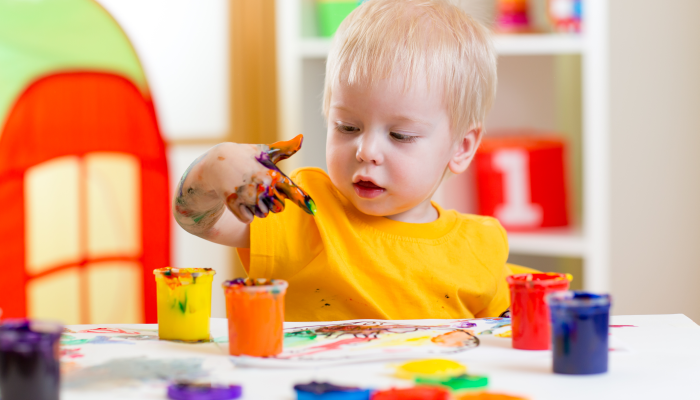
Toddlers are naturally creative and they love to explore color and texture. Setting up creative art stations for some messy fun is an excellent way to work on fine motor skills and encourage language development.
Art activities are also great for sensory stimulation and can easily be adapted for children with disabilities so that everyone can play together.
You will need:
- Non-toxic finger paint, squeeze paint, large toddler paint brushes, and poster-size paper or a roll of butcher paper
- Sponges, stampers, and other items, like toy cars to make imprints in paint
- Play-doh with toddler tools like rollers and cookie cutters
- Glue sticks and paper shapes, like butterflies or fish, that can be covered with craft pom poms
- Wipe-clean tablecloths or newspaper to cover surfaces
- Smocks for kids to cover clothes
No products found.
No products found.
No products found.
Set it up:
Set up your stations around a room that’s easy to clean, like your kitchen—or weather permitting, take your stations outside for a playdate outdoors. You could also pull these projects out to do one at a time.
Cover your surfaces and soft furnishings. Give the children smocks to wear.
Set up an area or small table for each activity, for example, a finger painting station with a big piece of paper to cover with pictures, a Play-Doh station with tools, and a pom-pom sticking station.
Allow each child at the playdate to choose what they’d like to do or ask them where they’d like to start together. Emphasize cooperation, teamwork, and creativity over the end product.
After they’ve made their creations, set up a little museum on a table or wall where parents can admire their artwork.
Get the kids involved in helping you clean up too once their craft projects are complete.
Always supervise young children and watch them around paints, pom poms, and other craft supplies which they could ingest.
2. Indoor Obstacle Course
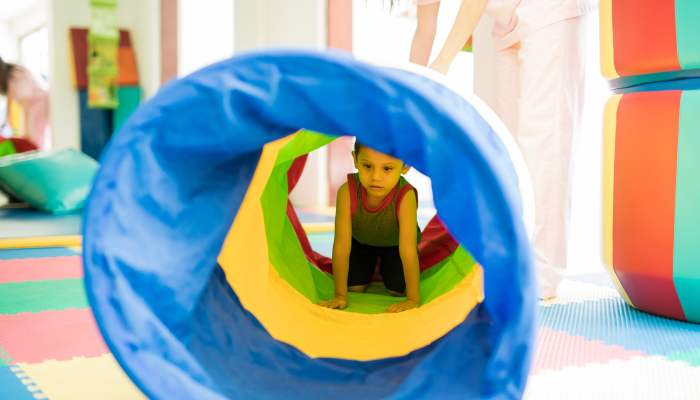
So you’ve invited your toddler’s friend over for a play date but they’re fighting over toys and tensions are rising. You thought you’d have a few hours to chat with the other parent, but things aren’t going well.
A simple way to keep kids entertained indoors is to have them help you build a fun obstacle course.
You will need:
- Sofa cushions, pillows, boxes, tunnels, bean bags, stuffed toys, and any other soft items that won’t hurt if kids crawl or fall on them
- Objects like kitchen spoons to balance a ball or bean bag while walking, or a block of towers to knock down at the end
- A timer (optional)
Set it up:
Clear some floor space.
Talk with the kiddos about how to build the course. Set up pillows, tunnels, and boxes to create obstacles that each child has to crawl through, climb on, or carry.
Get creative! In addition to climbing and crawling, have kids carry a ball on a spoon around the room, kick a ball into a box, or knock down a tower of blocks.
For an extra level of fun, see if kids would like to time themselves to see how fast they can get through the course.
Games like this encourage cooperation, social skills, gross motor skills, and language.
3. Music and Dance Party
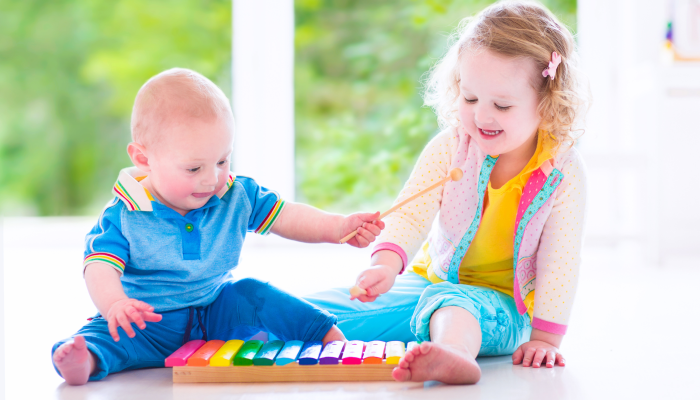
Little ones cannot resist music, rhythm, and dancing. The great thing about a dance party is that you can do it virtually anywhere. It’s a super easy toddler playdate to set up and it’s full of learning and fun too.
You will need:
- A playlist of toddler-friendly songs and your child’s favorite tunes
- Colored lights (optional)
- Toddler instruments like shakers, maracas, drums, or castanets
Set it up:
Create a toddler-friendly playlist on your phone before the playdate. Get your child’s input about their favorite songs. This is something you can add to and change as your child grows.
You can always just turn the music on for an impromptu party. However, if you’ve invited other kids over, then consider setting up a mini disco in your kitchen or living room.
Change your lighting to create a special atmosphere. Set up your child’s galaxy light projector or invest in a spinning disco ball light. We bought one when my kids were toddlers and we used it all the time. Even stringing up some Christmas lights will give the room some extra sparkle.
No products found.
No products found.
If you have a bubble machine (another gadget that we used again and again) a toddler dance party is a great time to pull it out.
No products found.
Add to the fun with any instruments you might have, like shakers, maracas, drums, or castanets and get ready for the kiddos to have a blast!
4. Scavenger Hunt
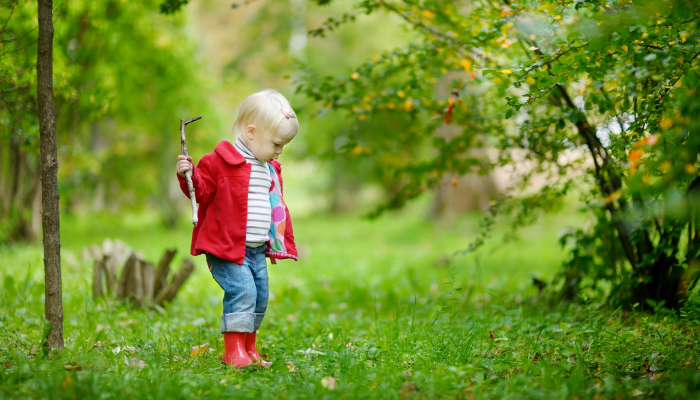
A scavenger hunt may sound like it needs a lot of organization, but it’s easy to do and a great learning opportunity for little ones. A scavenger hunt is perfect for a sensory playdate outdoors, although it works indoors too.
If you’re looking for ideas for themed playdates, a hunt is great because you can get kids to find things around your house or yard that go with your theme.
You will need:
- Some paper to make lists of items to find
- Buckets or bags for collecting items
Set it up:
Your scavenger hunt can be structured or informal depending on the age and developmental stage of the kids.
Whichever way you run it, you will need a list of items to find. For young children, you might give them items to find with verbal instructions, one at a time. For example, you might say, “Okay, now everyone go and find me three leaves and bring them back.”
In this kind of hunt, little ones are learning to count, listen, and follow instructions.
For older kids, you may give them a list of pictures, such as a ball, a car, and a teddy bear. Send them off as a team to find and collect these items in the house.
A structured hunt could have a checklist with pictures with the words for the item.
Including numbers of items like “three rocks” or colors of items like “a yellow leaf” also reinforces language skills and color and number recognition.
Working in teams also helps with cooperation, communication, and building friendships.
5. Cardboard Box Construction Zone
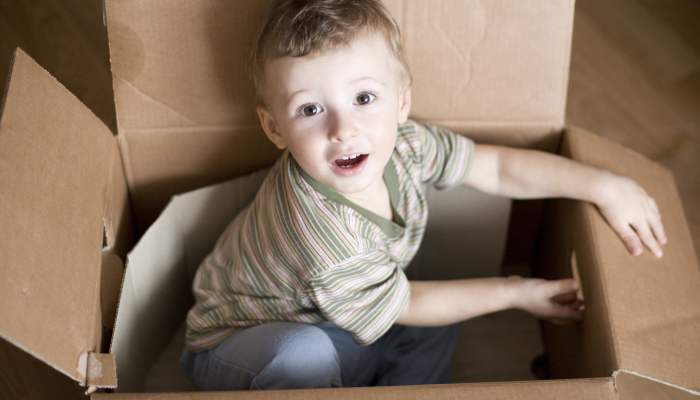
I have many photos of my kids playing with boxes as toddlers. They made boxes into boats, tree houses, caves, rockets, beds, and cars. There’s almost nothing a child cannot imagine and create with a box.
The American Academy of Pediatrics11. Yogman, M.. The Power of Play: How Fun and Games Help Children Thrive. HealthyChildren.org. 2023. https://www.healthychildren.org/English/family-life/power-of-play/Pages/the-power-of-play-how-fun-and-games-help-children-thrive.aspx (AAP) recommends giving children simple and inexpensive real-world objects to play with, like boxes and wooden spoons, to engage their creativity and help them learn how the world works.
You will need:
- Recycled cardboard boxes of all sizes from deliveries or your local supermarket
- Building blocks, pillows, soft play cubes, crawling tunnels, or any other safe, indoor toys that can be used to build with
Set it up:
Keep boxes from the recycling pile or head to the supermarket to ask for their spares.
Be creative about the boxes you choose. You can include shoe boxes, pasta boxes, and cereal boxes, for example, in addition to any larger ones you might come across.
Clear a floor space and spread out all of the “building materials.” Then all you have to do is let the kids put their imaginations to work.
If you have large boxes, assist the children with any structures they want to build. Always supervise children in this activity as they may climb in and out of the boxes.
If you have smaller boxes, encourage the kids to build houses or buildings. Assist them with any gluing, attaching, or cutting that they might want to do.
Playing with boxes on a play date is a brilliant free play activity that helps kids with gross and fine motor skills, as well as encouraging teamwork, creativity, and the start of basic STEM concepts like balance, weight and gravity.
References
- Yogman, M. (2023, May 3). The Power of Play: How Fun and Games Help Children Thrive. HealthyChildren.org. https://www.healthychildren.org/English/family-life/power-of-play/Pages/the-power-of-play-how-fun-and-games-help-children-thrive.aspx
Related Posts

Assistive Technology, Orientation and Mobility, Visual Impairment
A New Mobility Technology for Blind Users: Lumen Smart Glasses
Learn about Lumen smart glasses, an innovative assistive technology designed to help blind and visually impaired users navigate safely and independently.

Braille and Literacy, Music Play, Special Needs, Visual Impairment
Braille needs allies. Music can be one of them.
An inspiring look at how music can support Braille literacy, creativity, and inclusion for blind children.

Parenting, Special Needs
Love Languages for Kids With Disabilities: 5 You Might Miss
Learn 5 love languages you might miss in kids with disabilities and special needs, plus simple ways to recognize and respond to their unique signs of connection and affection.