
21 Sensory Room Ideas to Try at Home

This post may contain affiliate links; please see our terms of use for details.
- Sensory rooms can benefit all children, but are particularly effective for kids with autism, ADHD, sensory processing disorder, or other emotional, physical, or developmental issues.
- A sensory room in your home can provide a calm space where your child can decompress from overstimulation.
- You can also create multi-sensory environments with specific objects and materials that stimulate your child’s sensory needs and help them process sensory information.
- You can tailor a sensory space in your home to your child’s needs with simple and inexpensive products and items they will enjoy.
Creating a sensory room or space in your home doesn’t have to be complicated. Although many “sensory products” are marketed to parents, it’s really more important to consider your child’s specific needs and preferences for sensory stimulation when designing your space.
Adding simple elements to a room like galaxy lights, soft bean bags, or even just a pop-up tent where your child can relax with a weighted blanket can be enough to soothe anxiety, help your child focus, or to give them a sensory break.
For children working on gross motor skills or who need a safe place for movement, sensory hammocks and soft play blocks are also easy additions to your sensory room.
We’ve found some simple sensory room ideas to try at home to help you make a great sensory space where you and your child will love spending time.
How to Create a Sensory Room at Home
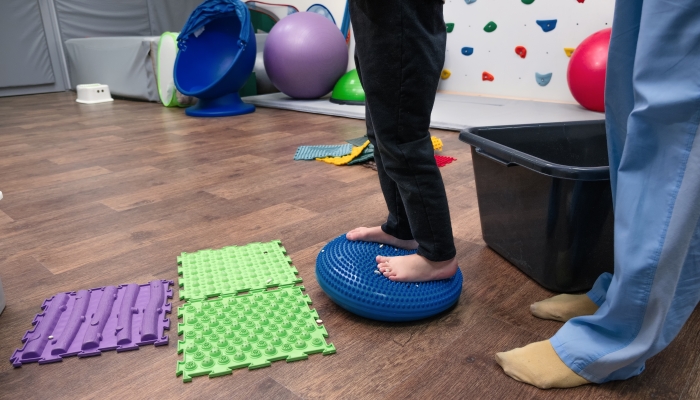
A sensory room is a safe space that provides children with multisensory experiences to help with any or all of the following:
- Calm and soothe anxiety
- Provide a break from overstimulation
- Help with sensory overload
- Satisfy sensory-seeking behavior productively
- Provide an opportunity for exercise and motor skill development
Although any child can benefit from a multi-sensory room, they are beneficial, effective, and enjoyable for children with autism, ADHD, sensory processing disorder, or other emotional, physical, or developmental disabilities, delays, or disorders.
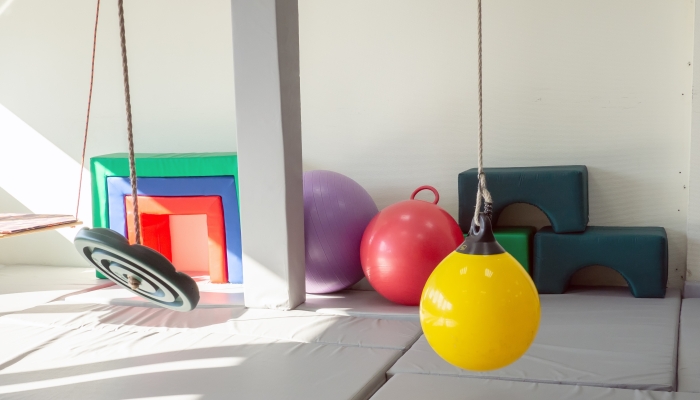
You may have come across elaborate sensory rooms in your child’s school, clinic, doctor’s office, or, more commonly now, in public spaces like children’s museums or airports. Some sensory rooms may include equipment like sensory swings or sensory soft play blocks.
However, you can create an amazing, dedicated sensory room or space in your home tailored to your child’s specific preferences and needs without spending a lot of money or hauling in a lot of special equipment.
What should you consider when designing a sensory room?
When creating a sensory room, sensory corner, or other space in your home, consider the following in your sensory room planning process:
| Your child’s preferences/needs |
|
| Purpose |
|
| Lighting |
|
| Seating and Equipment |
|
| Safety |
|
Not all children will enjoy all sensory equipment, products, toys, or lights that are marketed as sensory solutions. An effective sensory space in your home should be tailored to your child’s needs and preferences and, most importantly, be a safe place for sensory play and relaxation.
21 Simple Sensory Room Ideas
Lights and Visual Sensory Input
Creating different lighting effects is one of the simplest and least expensive ways to create sensory spaces for children who respond to visual sensory stimulation. Try the following:
- Dim the room: Use blackout curtains for windows, install dimmer switches or use floor lamps, and avoid overhead fluorescent lights.
- LED lights: LED lights come in strips you can put around the ceiling or floor or as curtains of light that change color and patterns. They’re a simple and easy way to change the room’s atmosphere.
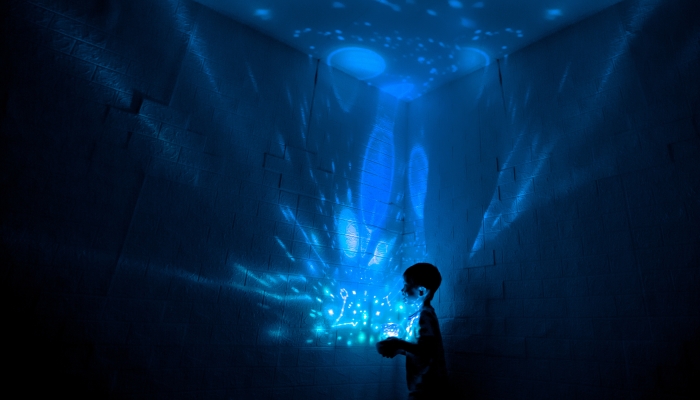
- Light projectors: Galaxy lights and light projectors work well on walls and ceilings that are painted a darker color or use them against dark curtains.
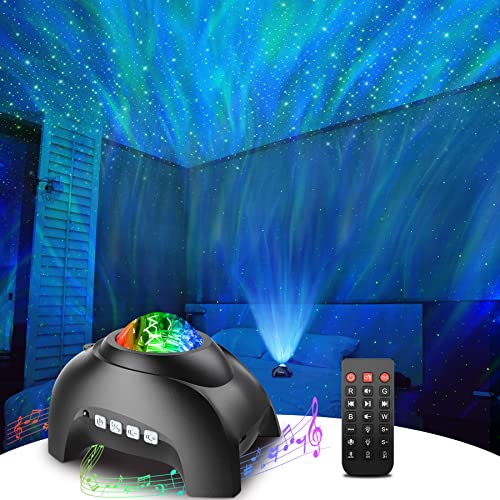
- Upgraded Galaxy Projector: Elevate any room with Rossetta Galaxy Projector, featuring stunning northern lights and a starry sky. Use it as a night light or white noise machine to create a calming light ambiance with soothing sounds for relaxation or sleep
- Sound Activated & Music Speaker: Sync the star projector to music for a magical atmosphere. Color changing LED lights for bedroom create a vibrant light show that moves to the beat, Connect via Bluetooth for immersive sound and light effects in any room or durring outdoor events
- White Noise Sound Machine: This night light for kids features 8 calming white noise options to help babies, children, and adults sleep better. Perfect for bedtime, it doubles as a soothing tool to promote sleep or ease insomnia, while also adding more fun
- Remote Control & Timer: Easily manage your galaxy light with the included remote. Adjust brightness, lighting modes, colors, and music, plus control volume. Set the timer to turn off in 1 or 2 hours, or let it auto off after 4 hours for worry free sleep
- Bubble tubes: Children love bubble tubes, where they can watch bubbles float through changing colors and lights. Some include fish or other floating objects for interest.
No products found.
Sound and Auditory Input
For some children, sound can be calming when they’re overwhelmed by too much sensory information. They might like sound in the background, or they might want to create it themselves with some of these ideas:
- Music: Allow your child to choose calm music that they enjoy and make it available for them to play either for the entire room or in personal headphones.
- Ambient sound: Play recordings of nature sounds like waves, raindrops, or sounds of the forest, which you can find on music and meditation apps.
- Rain stick: Loved by children of all ages and abilities, a rain stick provides calm auditory and tactile sensations. Transparent plastic rain sticks also provide visual stimulus.

- HERITAGE HANDCRAFTED IN CHILE – Each 20″ rainstick is handcrafted by native artisans from Chile using the naturally grown Copado cactus found in the deserts of Chile, South America. This ensures both musical quality and durability. The process includes hollowing out the cactus, which has matured over decades, and inserting spines and pebbles to create its distinctive rainfall sound.
- CAPTIVATING RAINFALL SOUND – Enjoy a richer, clearer, and more resonant rain-like sound with our rainstick. It offers a rain-trickle sound that can last for a few seconds when played correctly. Tip the rainstick at an angle and slowly rotate it for a longer rain sound, allowing the filler to trickle slowly through the cactus.
- CULTURALLY RICH DESIGN – Wrapped in brightly dyed rasta-colored Chilean yarn (red/yellow/green), this rainstick is not only a musical instrument but also a vibrant cultural artifact. The colors and construction reflect a deep heritage and add a visually appealing element to its design.
- ENHANCED DURABILITY AND MAINTENANCE – Smoothly sanded and finished with a high-quality sealant, our rain maker is water-resistant, stain-resistant, and easy to clean. This ensures it maintains its aesthetic appeal and functional integrity over time.

- Practice visual awareness and Auditory Sensory: by watching the colorful beads move through the translucent rattle, Suitable for 3 years and up
- Develop dexterity and coordination: by shaking, turning over, rolling on a surface, and standing up on either end
- Great Education Function: Baby rainmaker rattle toy supplies early education for learning and discovering colours, sounds and movements; Fun and entertaining for your baby
- Muiscal tools: Filled with a lot of beads, create different sounds as a Rainmaker musical instrument by shaking, turning or rolling
- White noise: If your child finds music or other sounds too stimulating, they might prefer the background hum of a white noise machine.

- White Noise Sound Machine: The Homedics White Noise Sound Machine includes 6 digitally recorded relaxing sounds designed to mimic the natural environment: White Noise, Thunder, Ocean, Rain, Summer Night, and Brook
- Compact and Portable: This portable sound machine is lightweight, compact, and easily fits into your purse, bag, or suitcase
- Baby Sleep Aid: Add these rhythmic sounds to your baby’s sleep routine to help them fall asleep faster and stay asleep longer; it makes the perfect baby sound machine and baby registry must-have
- Auto-Off Timer and Volume Controls: Choose to play relaxation sounds on this ambient sound machine continuously or opt for the auto-off timer; the timer features 3 options: 15, 30, or 60 minutes; adjust the volume with convenient volume control buttons
- Instruments: Instruments like a steel tongue drum or meditation chimes create soothing sounds and help with fine and gross motor skills. My kids love their steel tongue drum and find it absorbing and calming.

- Professional 11-Note Instrument : Crafted with precision-tuned 12-inch carbon steel, this meditation drum delivers ethereal C Major pentatonic tones. Great for beginners, create soothing melodies instantly using included mallets or hands – no musical experience required. Ideal for stress relief and enhancing yoga sessions.
- Multifunctional Healing Tool : From music therapy to spiritual rituals, this steel tongue drum excels in meditation spaces, sound healing workshops, and home decor. Comes with illustrated music book & note stickers for accelerated learning. Thoughtful gift for musicians, therapists, and wellness enthusiasts.
- Premium-Grade Durability : Featuring laser-cut anti-rust steel construction with hand-finished edges. Water-resistant coating ensures studio-quality resonance for years. 35% thicker than standard drums for richer harmonics.
- Complete Starter Kit : Includes: 1x 12″ Steel Drum, 2x Silicone Mallets, 1x Waterproof Carry Bag, 1x Strap, 4x Finger Guards, 1x Songbook, 2x Note Sticker. No musical background is needed to give yourself a sense of exploration.

Equipment for Physical Stimulation
For a multi-sensory environment that encourages work on balance, movement, and exercise, check out some of this great sensory room equipment:
- Sensory hammock: Large sensory swings can be hard to install and expensive, but a sensory hammock takes up less space and offers kids a lovely relaxing place.

- [A RELAXING SPACE FOR KIDS ] Aokitec sensory kids swing help your children relax and get their bearings in. The cocoon swing provides a hug-like effect for little ones. The wonderful experience and sensory input will let your kids spend hours in.
- [SOFT SILKY NYLON] This therapy swing is made of high quality material–soft & silk nylon. It measures 59″L x 67W”. Kids can sit and cocoon comfortably in the hammock with a sense of calmness. Our updated hammock can block out unwanted sensory stimulation.
- [FOR SPECIAL NEEDS] Ideal of this cuddle swing is designed for kids and teens who have sensory Processing Disorder,or those on the autism spectrum. The kids swing helps child learn body awareness, balance, motor planning, and spatial skills. It also provides sensory pressure all over and creates a fun space to bounce, swing, spin, or lie down enjoying the movement of the swing.
- [ALL HARDWARE INCLUDED &EASY USE] This indoor sensory swing comes with extra accessories, including daisy chain, O-sling, carabiner, 360° swivel hanger, expansion screws x2 and self-tapping screws x2. And you can refer to the installation video or the instruction which is attached with the product, so that the installation will be very easy.
- Indoor climbing gym: Indoor climbing equipment can range from simple climbing ladders and triangles to more complex indoor jungle gyms, depending on your child’s abilities and goals.
No products found.

- TRUE-TO-SIZE, Bigger, Better and More Fun Some climbers look larger than they are. Our photos are real and true to size. Our climber is larger than others and built to last. Unlike small climbers that kids outgrow quickly, the Avenlur Magnolia offers a climber that can be used for multiple ages, and monkey bars that have the space to climb.
- Premium New Zealand Pine Construction Many climbers use thin dowels or low-grade wood. Magnolia is built from high quality, durable New Zealand Pine with smooth edges, reinforced joints, and superior stability. It is third-party tested to meet the highest U.S. child safety standards.
- Easy Assembly with Clear Manual Magnolia arrives with a simplified step-by-step manual, labeled hardware, and improved instructions. Parents consistently report faster and easier setup compared to other indoor climbers.
- Stable, Sturdy and Low to the Ground Great for both confident and cautious climbers. The wide square base, sturdy rails, and low height help prevent tipping and provide a safer introduction to climbing, strength building, and gross motor skill development.
- Wobble board: Wobble boards are great for working on balance and for rocking. Kids can stand or sit in them. Flip them over, and they can crawl over the arch. They’ve got loads of uses.
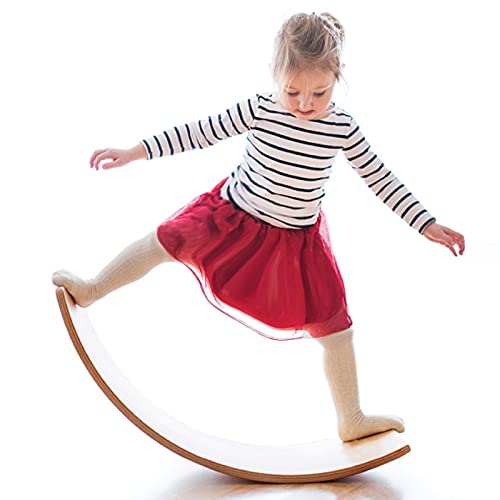
- 🌱 UNLIMITED WAYS TO PLAY: The Wooden Balance Board is whatever you imagine it to be – a swing, a bridge, a shop, a cabin, a stepping stone, a racetrack, a lounge chair, fitness equipment, a puppet, a small football goal, a teeter popper or a tunnel.
- 🌱 DEVELOP MULTIPLE SKILLS: It stimulates the vestibular system, which is of great importance for general development and learning. It supports the muscles responsible for the correct posture develops the sense of balance.
- 🌱 BOTH FOR KIDS AND ADULTS: The board is a wooden toy that grows with the child and is also very suitable for adults. To get fit, stretch your back (as a seat aid) in yoga exercises, to train balance or just because it’s fun. It’s possible to do a wide range of exercises on the wooden board.
- 🌱 TRUE QUALITY ASSURANCE: Highest quality natural real wood and premium paint. The wood has unique coloring, texture, grain, and mineral patterns in the outer layer, which make each board one of a kind.
- Balance balls: Balance balls are great for stretching, playing, balance, and core strength. They come in many sizes, including kids’ sizes. My sons had a balance ball chair which helped with focus while satisfying their need to move.
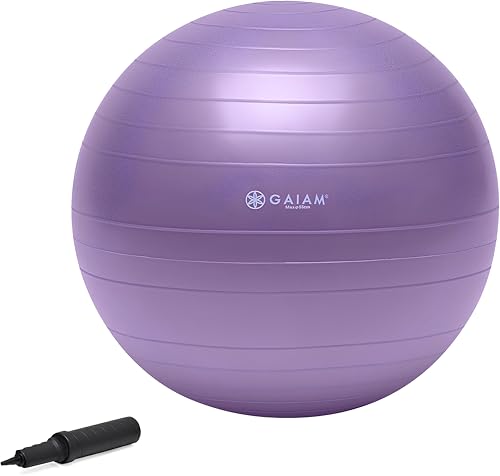
- BALANCE BALL KIT: Total Body Balance Ball workout kit with small (55 cm) exercise ball for an ideal low-impact core strengthening workout
- WORKOUT GUIDE INCLUDED: Exercise abs, back, glutes, lower and upper body with the included yoga ball and a 105-minute workout designed by fitness expert Tanja Djelevic
- 55cm BALANCE BALL: Small size balance ball is recommended for users between 5’0″ and 5’5″ tall. Use the stability ball as an exercise and fitness tool or as an alternative office desk chair solution for active sitting.
- KIT INCLUDES: Small purple exercise ball for yoga and Pilates, easy-inflate air pump, and workouts (Packaging may vary to include DVD or Digital Download)
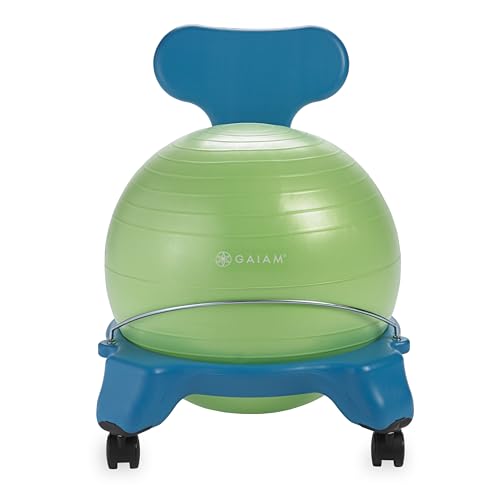
- ALTERNATIVE DESK CHAIR: The perfect kid-sized seat for improving concentration & focus at home or in the classroom at their desk, this exercise ball chair helps to reduce restlessness, fidgeting and prevent boredom
- ACTIVE LEARNING CHAIR: Stability ball chair promotes a healthy posture & keeps the mind focused and body engaged – Statistics have shown that kids are able to focus more intently when actively balancing their body on a balance ball
- RECOMMENDED USER HEIGHT: Designed for kids ages 5-7, or children between 42 and 51 inches tall making this active sitting chair ideal for preschool, 1st and 2nd grade students. Weight limit: 175-pounds.
- INCLUDES: Child-sized 38cm balance ball, easy-inflation air pump, adjustable back support bar, secure metal ball holder, and easy-glide caster wheels (2 lockable)
- Soft play blocks: Soft play blocks are great for climbing, sliding, crawling, carrying, pushing, building, or even just for relaxing. They’ve got tons of great sensory uses.
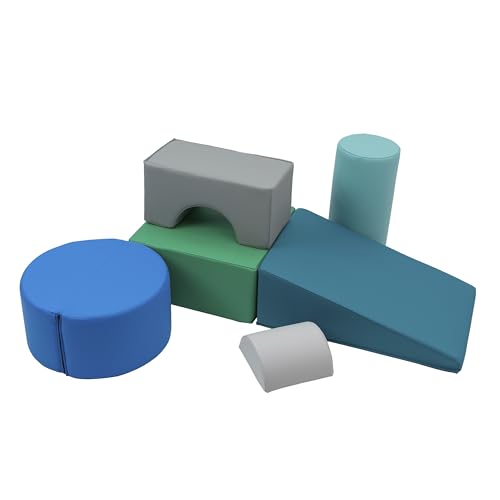
- CRAWL OR STACK: a configurable climber for new crawlers becomes a soft block playset as they grow; designed for infants and toddlers exploring and learning to grasp and play; foldable half moon speed bump becomes a seat perfect for story time
- LITTLE IMAGINATIONS: as your crawler grows, watch as they race toy cars and trucks up and down the ramp, the tiny tunnel becomes a half-pipe, the cube a stage for playing with dolls or figurines
- IDEAL FOR IN-HOME AND INSTITUTIONAL LEARNING: high-quality, versatile climber incorporates safe indoor active play into any learning environment, from home to classroom, and anywhere in between
- GROSS MOTOR DEVELOPMENT: encourages little ones to develop important growth skills, hand-eye coordination and social skills as they play
- Sensory mat: Sensory tiles offering different textures and colors can be great for sensory-seeking kids to walk on, manipulate, and explore.
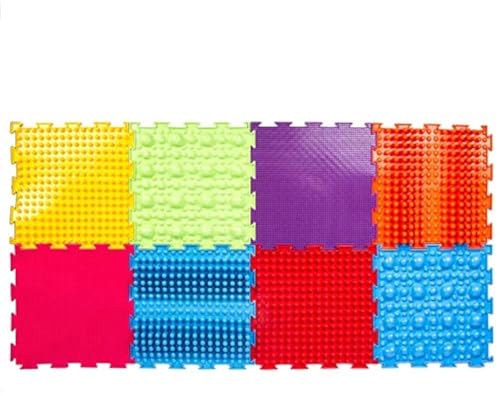
- Kids Floor Mat Set Contains: 8 modules. Soft Grass (2 pieces), Thorns (2 pieces), Pebbles First Step (2 pieces), Cones (2 pieces)
- Immersive Playful Learning: Transform playtime into a captivating learning experience with our Sensory Mat Module Set. Each game mat is designed to engage children’s senses, enhancing their tactile perception, motor skills, and cognitive development through interactive play.
- Innovative Massage Integration: Elevate the excitement with built-in massage elements on every game mat. These strategically placed massage nodes provide a delightful sensory experience, promoting relaxation while kids actively explore and have fun.
- Versatile Interactive Games: Foster creativity and adaptability as children dive into a world of imaginative play. The set includes a variety of game mats, each offering unique challenges and activities, encouraging kids to move, think, and strategize as they navigate different textures and designs
Relaxing Elements to Reduce Stress
If the purpose of your room is to reduce sensory overload and promote relaxation, creating a comfortable space with soft seating and cozy corners will be key. You can create this atmosphere easily with some simple pieces:
- Bean bags: Bean bags are great for soft, comfortable, and tactile seating. Bean bag chairs are a more structured option. Look for textured, sensory fabrics like velvet, corduroy, or micro suede.
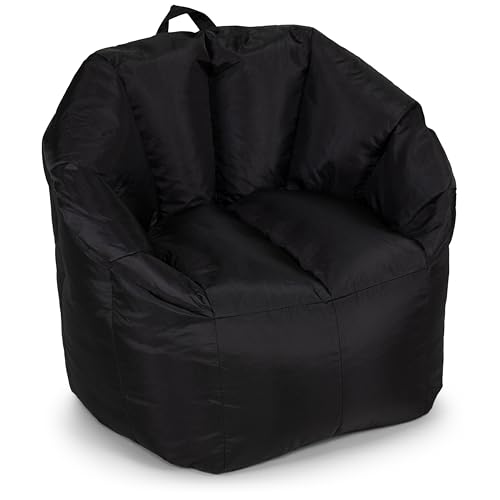
- COMFORT MEETS STYLE: This fan-favorite bean bag chair’s structured design not only gives you the support you need but also comes in a variety of styles to fit your personality!
- DURABLE MATERIAL: Designed with our durable, stain-resistant SmartMax fabric, spot cleaning is easily accomplished.
- PERFECTLY FILLED: We purposely fill your bean bag with the perfect amount of beans, because we know an over-filled bean bag is not comfy!
- IT’S IN THE DETAILS: Double-stitched with dual zippers for extra safety and durability. Take the Milano bean chair with you wherever you go with the convenient built-in handle.
- Weighted blanket: Weighted blankets offer deep pressure stimulation that some children find calming. Be sure to choose an appropriate weight and size for your child’s age that they can handle easily. Again, velvety, textured covers add a tactile sensory element. If a whole blanket is too much, look for smaller weighted lap pads.

- Kids weighted blanket 5lb
- Weighted kids blanket is made of cotton fabric, while the other is very soft, minky cuddle fabric for sensory input
- Relax the kids body and provides calming
- Easy Care: weighted kids blankets are machine washable (cold 30℃), wash on gentle cycle only. Do not use bleach!
- Headphones: Many kids find noise-canceling headphones very useful for focus and concentration. Let your kids use them with calming music, ambient sound, or just to help them find some quiet.
- Sleeping bag: Keeping a sleeping bag in your sensory space gives your child a cozy spot to relax. As with weighted blankets, choose sleeping bags appropriate to your child’s age and size.
- Sensory tent: A tent or teepee is a great way to create a sensory space or a quiet corner in your sensory room, which you can fill with pillows, sleeping bags, and stuffed animals.
- Liquid floor tiles: Although you can find tiles like these as smaller fidget toys, big liquid tiles for kids to walk on or play with to watch the colors change can be a nice visual, tactile, and stress-relieving element for your room.

- Bright cosmic liquid colors that move with every step, jump, dance, or hop ; environmentally protective and safe around kids.
- Includes 9 pieces of Liquid Motion Floor Tiles, size of each tile is 11.8″ x 11.8″
- No installation required: it could be placed around in any corner of the house, school or can be used to decorate.
- Anti slip backing: Liquid filled Motion Floor Tiles have a strong anti slip function that help protect floor and keep still with pvc anti-mat slip.
Why Is a Sensory Room Beneficial for Children?
According to the National Council for Special Education11. Sensory Spaces in School. National Council for Special Education. 2021. https://ncse.ie/wp-content/uploads/2021/10/NCSE-Sensory-Spaces-in-Schools-2021.pdf (NCSE) the many benefits of a sensory can include:
- Reducing sensory overload for children who get anxious or overwhelmed
- Increasing sensory input for children who need more sensory and tactile experiences to improve self-regulation
- Promoting self-care, self-help skills, empowerment, skill development, self-esteem, resilience, and recovery
In addition to relieving stress, improving focus, and developing communication and social skills, experts at St. Jude’s Health Care Services22. The Many Benefits of Sensory Rooms. St Jude’s Health Care Services. 2021. https://stjudes.com.au/news/the-many-benefits-of-sensory-rooms also point out that sensory spaces and sensory equipment have positive effects for children with physical difficulties such as:
- Developing visual processing abilities
- Developing fine motor skills
- Providing opportunities to exercise gross motor skills
- Improving balance and movement
Academic evidence on the positive effects of sensory rooms is inconclusive. However, anecdotal evidence and experience of parents, teachers, and professionals suggest that they do benefit children.
These benefits for children with different disabilities and learning difficulties are why so many schools are creating sensory rooms and spaces. Having some time in a sensory space can help students return to the classroom better able to cope with the environment and to focus.
To use a sensory room effectively, the NCSE suggests the following:
- Use a time or visual schedule to help structure your child’s time and to aid them in transitioning into and out of the room.
- Do not use or withhold the room as a reward or consequence in behavior management.
- Structure your child’s time in the sensory space and guide them.
- Remain flexible and adaptable, observe how your child responds to different room elements, and make changes as necessary.
References
- Sensory Spaces in School. National Council for Special Education. (2021). https://ncse.ie/wp-content/uploads/2021/10/NCSE-Sensory-Spaces-in-Schools-2021.pdf
- The Many Benefits of Sensory Rooms. St Jude’s Health Care Services. (2021, October 27). https://stjudes.com.au/news/the-many-benefits-of-sensory-rooms
Related Posts
Sensory Activities
5 Sand Play Activities to Encourage Fine Motor Development
Sensory bin, at the beach, or in a sandpit? Try these sand play activities to help toddlers and preschoolers develop their fine motor skills.
Sensory Activities
5 Edible Sensory Play Ideas
Check out our favorite edible sensory play activities to engage children's senses, boost their development, and provide hours of fun.
Sensory Activities
How to Make Unpoppable Bubbles
Discover the secret to making unpoppable bubbles with this easy guide. You only need three ingredients!